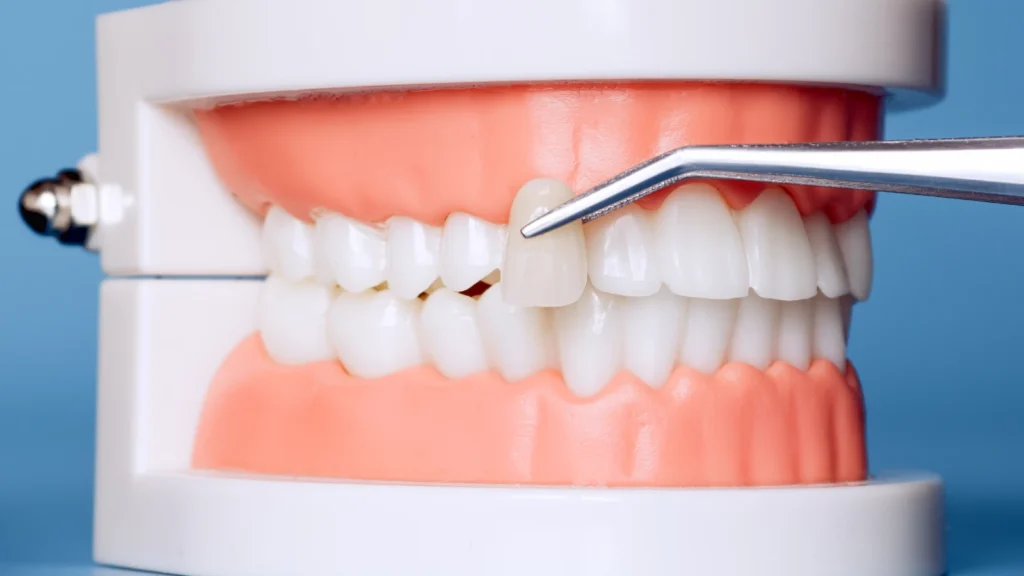
“Turkey teeth” is not a treatment.
It’s a popular catch-all phrase that patients use to refer to different types of cosmetic dental work performed in Turkey or popular hubs like Antalya and Izmir. Porcelain veneers, dental crowns, dental implants, and full mouth smile makeovers are common procedures.
This is why searching for turkey teeth gone wrong produces extremely mixed results, an issue frequently highlighted by the BDA.
One person may have cosmetic issues with their veneers. Another has pain from a dying tooth.
Why do some Turkey teeth smile packages fail, whether they involve a front veneer or a back wisdom tooth? Why does dental work sometimes fail when you get it abroad?
For a UK patient, problems can be harder to manage after returning home when a UK dentist assesses work from another dental clinic.
Contents
- Turkey Teeth Gone Wrong? What Are Some Possible Issues?
- Cosmetic Problems
- Biological Problems
- Functional Problems
- Why Dental Tourism Can Fail (“Turkey Teeth” Problems)
- Fixing Turkey Teeth: Problems That Are Easy and Problems That Are Not
- Common Turkey Teeth Issues
Turkey Teeth Gone Wrong? What Are Some Possible Issues?
One patient could have a crown that’s falling off.
Another may have a perfectly healthy smile that they still hate.
Keep reading to learn how to separate common problems and identify major red flags as well as how to know when Turkish dental work is causing irreversible damage.
Cosmetic Problems
These are instances where the teeth may be healthy but the overall aesthetic is unwanted. Some common complaints are:
- Teeth appearing too white
- Bulkiness to crowns or veneers
- Teeth being unnaturally shaped
- Teeth appearing too long
- Lack of symmetry between left and right
- Uneven gumlines
- Restorations that look fake or opaque
These problems are aesthetic in nature. They don’t pose the same dangers to your health as a dental infection but they can be just as frustrating.
Biological Problems
Biological problems can occur to the tooth, gums, and other supporting structures, sometimes leading to chronic infections or severe bone loss. Some examples include:
- Continued sensitivity
- Tooth decay
- Inflamed gums
- Infection
- Damaged pulp
- Abscess
- Teeth that require root canal treatment
Functional Problems
A restoration can look perfect but still not function correctly. Some examples of functional problems include:
- Uneven bite
- Difficulty chewing or biting
- Jaw discomfort
- Crown fractures that happen repeatedly
- Restorations feel too high when biting
- One side of your mouth closes before the other
Ideal cosmetic dentistry should address all three cosmetic, biological, and functional aspects of your teeth.
The appearance of your teeth is important but function and biology play huge roles too.
Understanding The Problems With Cosmetic Dentistry Overseas (“Turkey Teeth”)
There is rarely one single cause to any problem.
Sometimes issues happen because of something that occurred before the dentist ever saw you.
The treatment plan itself can create issues for the patient later on – even if the final crown or veneer appears technically acceptable.
Factors that can contribute include:
- Was the correct diagnosis made?
- Did the tooth really need that specific restoration?
- How much tooth structure was removed?
- Were the gums healthy?
- Was there any decay present at any time?
- Was your bite carefully planned?
- Were you grinding your teeth?
- What materials were used?
- Was the lab accurate?
- Was care taken with bonding or cementation?
- Was proper aftercare explained?
Approaching every patient with the same budget-friendly “smile package” or generic implant brands and standard full mouth implants like All-on-4 systems can cause issues later on.
Perhaps you needed teeth whitening and not crowns. Orthodontics may have helped instead of veneers. Maybe you were a perfect candidate for composite bonding.
Just because someone can offer you a quick cosmetic solution doesn’t always mean that’s the right treatment option for you.
For anyone travelling abroad, the treatment plan should identify the treating dentist and explain how follow-up for dental treatment abroad will work.
The Veneers vs Crowns Question: Why is This Important?
Understanding the difference between veneers and crowns is a major source of confusion among our patients that have searched “Turkey teeth”.
They are not the same thing and should not be used interchangeably.
A veneer typically covers only the front visible portion of a tooth. A crown covers a majority (if not all) of the tooth.
Crowns will often require more removal of your natural tooth than veneers.
Again, this doesn’t mean that crowns are bad. There are many cases where a crown is necessary to restore a badly broken down or restored tooth.
The question we ask is…did a healthy tooth require a crown?
Healthy teeth should not automatically be prepared simply to make every tooth look identical.
To ensure full informed consent, patients should know BEFORE treatment begins what will happen to each tooth. They should know:
“You are getting a Hollywood Smile” is NOT enough information.
“You will get a veneer on this tooth”
“This tooth requires a crown because…”
“This is the amount of natural tooth structure that we will need to remove.”
The name of the treatment matters because the consequences of each vary.
How Much Tooth Structure Will be Removed? Why is This Important?
Some restorations require removal of your natural tooth structure to prepare the tooth.
Once natural tooth such as enamel or even deeper into the tooth is removed – it does not grow back.
More removal also means that the restoration is closer to the dental pulp. This is where the nerves and blood supply of that tooth reside. Deeper tooth preparation can also increase the risk of pulp irritation or nerve damage.
If the pulp becomes damaged or incredibly inflamed, it could result in the tooth needing root canal treatment down the road.
Not every tooth will develop a problem, but the more tooth structure that is removed, the higher the overall complication risk can become.
That is why we feel there should be a solid clinical reason for removing healthy tooth structure. We cover this topic in much more detail on our Turkey Teeth Shaved Down article.
Turkey Teeth Problems: When do These Issues Show Up?
Not every complication will show up right away.
Some occur within the first few hours or days. Others may not become apparent for months.
Possible Problems You Notice Right Away
Patients may notice:
- Bite feeling high
- Gum soreness
- Sensitivity is too strong
- Having trouble chewing
- Temporary crowns feel loose
- New restoration came off
Possible Problems That Appear After a Few Weeks
Some patients start to notice:
- Sensitivity doesn’t go away
- Gums bleed when you brush
- Food gets trapped easily
- You have a bad taste in your mouth
- Discomfort in your bite
- Pain in your jaw muscles
- Chips in your teeth or restorations
Possible Problems That Appear Months Later
Even more slowly:
- Decay around the edges of your restoration
- Receding gums
- Wear down of cement or bonding
- Cracks in your teeth
- New veneers repeatedly debond
- Pulpal (nerve) damage or pain
This is why you can’t always judge a result by looking at the photo provided on day one when treatment was completed.
Maintenance years down the road matters. Continue reading to learn more about how to prevent Turkey Teeth problems.
Is Pain Normal With Turkey Teeth?
A certain amount of sensitivity after dental treatment is normal.
Persistent pain, discomfort that gets worse or pain that doesn’t improve after a few days should be checked.
Your dentist may look for signs of:
- Irritated pulp
- Damaged nerve tissue
- Teeth feeling too high in your bite
- Bare tooth structure that needs to be covered
- Decay
- Infection
- Loose restoration
- Gum inflammation
Keep in mind that the pattern of pain can help your dentist figure out what’s wrong.
Intermittent sensitivity that gradually improves is not the same as pain that gets stronger every day.
Pain that wakes you up in the middle of the night or pain that persists long after you stop drinking something hot or cold should also be evaluated.
The Fix will depend on the cause. Pushing more pain medication is not always the solution.
Can My Teeth Decay Under Crowns from Turkey?
Yes they can. Just because you have a crown or veneer over your natural tooth doesn’t make it immune to decay.
Bacteria can still cause damage to your tooth surrounding the restoration margin.
Dental decay may occur when:
- You’re unable to remove plaque buildup
- There is a defect in the margin of your restoration
- Restoration is difficult to keep clean
- Decay was present at the time and bacteria travelled under the crown
- Cement or bonding breaks down over time
Patients can’t always see what is happening underneath the crown. That is why KEEPING APPOINTMENTS for regular checkups is important.
Dark spots at the gum line, sensitivity or an odd taste in your mouth does not ALWAYS mean you have decay. But it shouldn’t be ignored.
Why Are My Gums Bleeding After Getting New Crowns?
Moderate gum bleeding after significant cosmetic work can happen for many reasons.
Your gum tissue may be irritated from the preparation and cementing process.
Gums that continually bleed or bleed every time you brush is something different.
Possible causes include:
- Buildup of plaque
- Margin placement makes it hard to clean
- Too much cement was used
- Crowns that are bulky
- Poor contour of the restoration
- Underlying gum disease
- Margin placement is too far below the gumline
When getting cosmetic dental work done, aesthetics play a huge role but FUNCTIONALITY matters just as much.
The patient should be able to effectively clean their teeth. If the cosmetic restoration makes this process extremely difficult, oral hygiene problems will persist no matter how fancy the ceramic looks.
Why Does My Bite Feel Different After Getting Turkey Teeth?
When multiple teeth are prepared and restored at one time, the way your upper and lower teeth come together can change.
Patients often notice:
- You closure with one tooth before the other
- Front teeth appear too long
- It feels strange when you chew
- Jaw muscles feel tired
- Pain in your jaw when you wake up
- Teeth chips appear over and over
Making small adjustments to the bite AFTER cosmetic work is done can be normal.
However, if you’re experiencing constant breakage or pain, something isn’t right.
Keep reading to learn more about why teeth chip after cosmetic dental work.
Fixing Turkey Teeth: Problems That Are Easy and Problems That Are Not
Continuing to chew on your tooth repeatedly because it “hurts too much to give up” is not normal.
Something can DEFINITELY be done about your Turkey teeth. The problem is, not every situation can be fixed easily.
Some issues are easier to correct than others. Your treatment options include:
Simple Cosmetic Adjustments
For aesthetic issues that don’t involve damaged teeth.
Bite Adjustment
Needed if restorations are hitting too soon or in the wrong spot.
Re-cementation
Used when a restoration has become loose but can still be saved.
Replacement of Restoration
Needed if a crown or veneer can no longer be repaired.
Gum Treatment
Scaling and polishing or gingival surgery when gums are involved.
Root Canal Treatment
Irreversibly damaged or infected pulp may require root canal treatment.
Orthodontics
In some cases, braces may be needed to correct tooth position.
Extraction
As a last resort, some teeth cannot be saved and will need to be removed, potentially requiring a bone graft before future restoration.
Every case should be treated individually and have a corrective treatment plan suited to the diagnosis.
When Are Fixing Turkey Teeth Procedures Considered?
Not every cosmetic problem requires major work.
If your crown keeps falling off, ask yourself why. If you have 5 veneers that constantly chip, your bite should be evaluated.
Just because you can fix your Turkey teeth doesn’t always mean you should.
Replace vs Repair: When Cosmetic Dentistry Should NOT Be Re-Treated
Having the same crown re-cemented because your dental tourist chose a glue they were familiar with is NOT always the answer.
Symptoms may improve but if the cause is not corrected, problems will continue.
Why did the crown come off in the first place? Was it your fault for chewing gum? Or was the bonding technique improper?
These are questions that should be answered.
Common Turkey Teeth Issues
What if My Turkey Teeth Look Fine But Hurt?
Doesnt hurt feel better than looking pretty? Of course not!
Just because your teeth may not look the way you wanted, doesn’t mean you shouldn’t seek help if they hurt.
If your teeth don’t hurt, but you hate how they look you still have options.
Keep reading to learn what we suggest for both cosmetic and biological problems.
Will Decay Happen Under My Crowns from Turkey?
As mentioned above, yes decay can happen under your new Turkish teeth.
Dental restoration does NOT guarantee you won’t have any issues with your teeth in the future.
If your crown(s) keep coming off, there is a problem that needs to be addressed.
Why Does My Bite Feel Different With My Turkey Teeth?
I have had patients with new veneers throw away their night guards because “my dentist said I grind but I don’t feel like I grind now.”
If your bite feels off, it’s POSSIBLE something can be done. Don’t try to fix it yourself by adjusting your teeth manually.
If you break a tooth or fracture a veneer while trying to fix your bite, do not attempt to repair it yourself; seek dental assessment.
Can Nothing Be Done About My Turkey Teeth?
In many cases something can be done, but the options depend on the diagnosis. The dentist that repaired your Turkey teeth previously may not be able to fix them permanently.
Just because you CAN’T fix your Turkey teeth doesn’t mean you SHOULD fix them yourself either.
You should know EXACTLY what is wrong before making that decision. Depending on the problem, that may require dental X-rays or, in some complex cases, a CBCT scan.
Sources
General Dental Council — Going abroad for dental treatment: guidance on assessment before travelling, dentist qualifications, treatment planning, complications, guarantees and aftercare. General Dental Council source
British Dental Association — UK dentists picking up the pieces from dental tourism boom: UK survey data on patients requiring follow-up after overseas dental care; crowns and implants were among the treatments most frequently requiring further work. British Dental Association source
NHS — Dental abscess: symptoms requiring urgent dental assessment and emergency signs such as significant swelling or difficulty breathing or swallowing. NHS dental abscess guidance