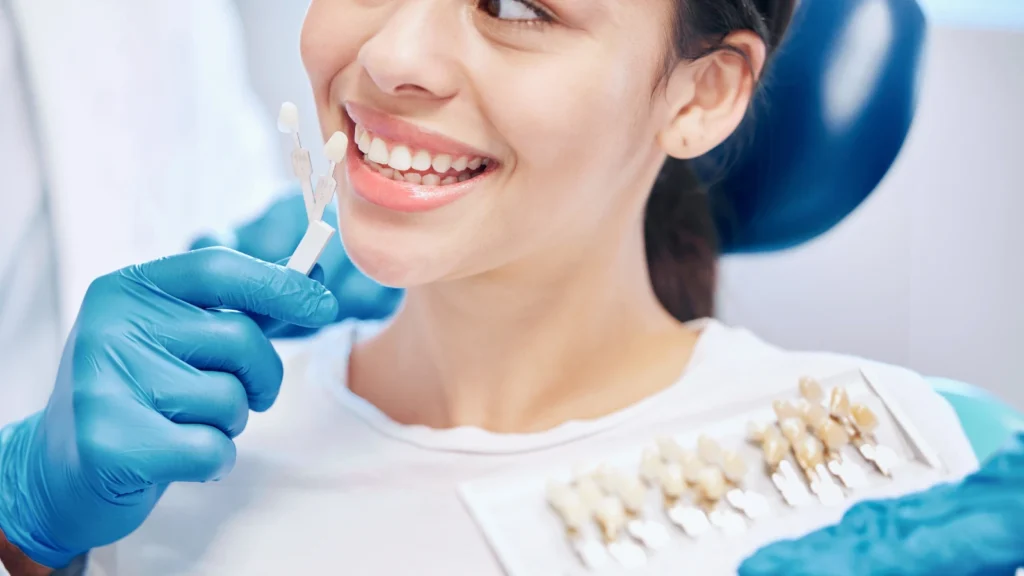
Porcelain laminate veneers are ceramic restorations, ceramic veneers, bonded to the front surface of teeth. They’re often used to change colour, shape, small gaps, worn edges and other cosmetic concerns without full coverage.
You may come across a number of terms for what is essentially similar treatment:
Porcelain laminate veneers
Porcelain veneers
Laminate veneers
Porcelain dental veneers
Dental laminates
Use of the word “laminate” generally just refers to the ceramic acting as a thin laminate over the front of the tooth rather than an alternative treatment.
For patients interested in porcelain veneers in Turkey though, we believe the question is rarely as simple as “which material sounds best?”:
Your tooth condition, enamel, bite, existing dental work and amount of change required can all affect whether veneers are right for you.
Summary: Porcelain Laminate Veneers
Porcelain laminate veneers are thin shells of ceramic made to fit individual teeth.
Whereas crowns cover much more of the tooth’s surface, veneers mostly cover the part you can see when smiling. This can sometimes spare more natural tooth.
Both of our dental drafts agree healthy enamel and good tooth structure are important. The laminate needs a stable surface to bond to.
Cosmetic issues porcelain veneers can be considered for include:
Colour
Small chips
Minor spacing issues / diastema
Worn or uneven tooth edges
Irregular tooth shape
Slightly uneven sized teeth
Minor cosmetic concerns
They will not solve issues like decay, gum disease or major bite problems. Porcelain veneers are about changing how your teeth look.
Porcelain vs Laminate Veneers
In day-to-day dentistry the terms porcelain veneer and porcelain laminate veneer tend to be used interchangeably.
“Porcelain veneer” is meant to describe the ceramic restoration added to the front of a tooth.
“Porcelain laminate veneer” usually highlights that this restoration is bonded as a laminate or thin layer rather than a full coverage restoration.
This doesn’t mean every laminate has exactly the same thickness or requires the same amount of preparation work though.
Preparation and final thickness will vary depending on your individual tooth.
Materials Used for Porcelain Veneers
Various types of ceramic can be used to construct veneers.
You may hear mentioned:
Feldspathic porcelain
Lithium disilicate ceramic
Feldspathic porcelain has traditionally been known for its aesthetic translucent properties and can still be used in select cosmetic cases.
Lithium disilicate is another ceramic material often linked to E- max veneers / Emax veneers.
Material choice should be based on the tooth in question, your bite, desired colour change and final design. Not just on what sounds most premium. Our drafts differentiate these ceramics but also stress case selection.
Porcelain Veneers With Dr.T.TUĞRUL ADA – YouTube
The Benefits of Porcelain Laminate Veneers
Porcelain veneers have gained popularity because they offer cosmetic alteration with more conservative tooth coverage.
Potential advantages include:
Translucent appearance similar to natural teeth
Porcelain’s resistance to staining
Tooth colour can be customized to match your remaining teeth
Better tooth shape
Closing off gaps between teeth
Improvement of chipped or worn tooth edges
Durability with proper care
Typically conserve more natural tooth than a crown when appropriate
Natural tooth enamel has certain light reflective properties that porcelain tries to imitate. When shade, shape and surface texture are planned properly this can allow porcelain veneers to blend in with your natural teeth.
However, the ceramic isn’t the only factor that leads to a natural result.
Who are Porcelain Laminate Veneers Good For?
Ideal candidates usually have healthy teeth and gums, good oral health, with mainly cosmetic issues.
Porcelain laminate veneers may be suitable if you have:
Discolouration that will not respond to whitening
Small chips in teeth
Spacing between teeth that is only minor
Edges that have become worn or uneven
Tooth shape that is irregular or uneven
Slightly differing sized teeth
Existing dental bonding that you would like replacing
The drafts also state that veneers may not be suitable if you currently have:
Active tooth decay
Gum disease
Insufficient enamel on teeth
Severe teeth grinding
Major bite discrepancies
If you have one of these conditions your dentist may recommend treating the problem first before proceeding with veneers.
Alternatively they may recommend a different treatment. Teeth whitening could be enough for example if colour is your only concern.
Orthodontics could work better if tooth position is the main issue. Minor changes may be suited to composite bonding instead.
Porcelain Laminate Veneers Require Tooth Shaving?
It is often necessary to prepare (remove some enamel from) teeth before porcelain veneers.
However, not every patient will require the same amount of preparation.
Preparation makes space for the ceramic so that when it’s added your teeth don’t look too bulky or thick.
Several factors can affect how much enamel is removed:
Position of existing teeth
Natural shape of teeth
Thickness of existing enamel
Amount of colour change required
Thickness of veneer chosen
Any existing restorations
How your smile will look when complete
Porcelain veneers are usually more conservative than crowns. As they don’t normally cover entire teeth.
However, conservative doesn’t automatically equal no enamel removal.
Once enamel is removed it will never grow back.
Can You Get No Prep Porcelain Laminate Veneers?
There are times when yes.
No- prep or minimal- prep ultra-thin veneers can be suitable where the natural tooth already has sufficient space to add ceramic without the restoration looking too bulky or thick.
Natural teeth that are:
Small
Slightly positioned towards the back
Possess narrow tooth shapes
Aligned correctly
Could be more suitable candidates for no- prep veneers.
If your teeth are already too far forward, bulky or very misaligned, with significant misalignment, adding porcelain without preparing the teeth may make them look even wider.
Having the least amount of preparation isn’t necessarily the best solution.
The aim should always be to preserve as much healthy tooth structure as possible without compromising the final restoration.
Composite Veneers vs Porcelain Veneers
Composite veneers are similar to porcelain but made from composite resin.
Compared to porcelain they can often be completed in a single visit and come with a lower initial price.
Porcelain usually provides better stain resistance and will hold up better aesthetically in the long term.
Repairing composite can be easier.
Like with laminate vs veneers neither material is ideal for every patient. Someone only wanting a small tooth changed may not need porcelain. Conversely larger restorations may do better with porcelain laminate veneers.
This section doesn’t need to be too detailed. We cover the veneer vs bonding topic in more depth elsewhere.
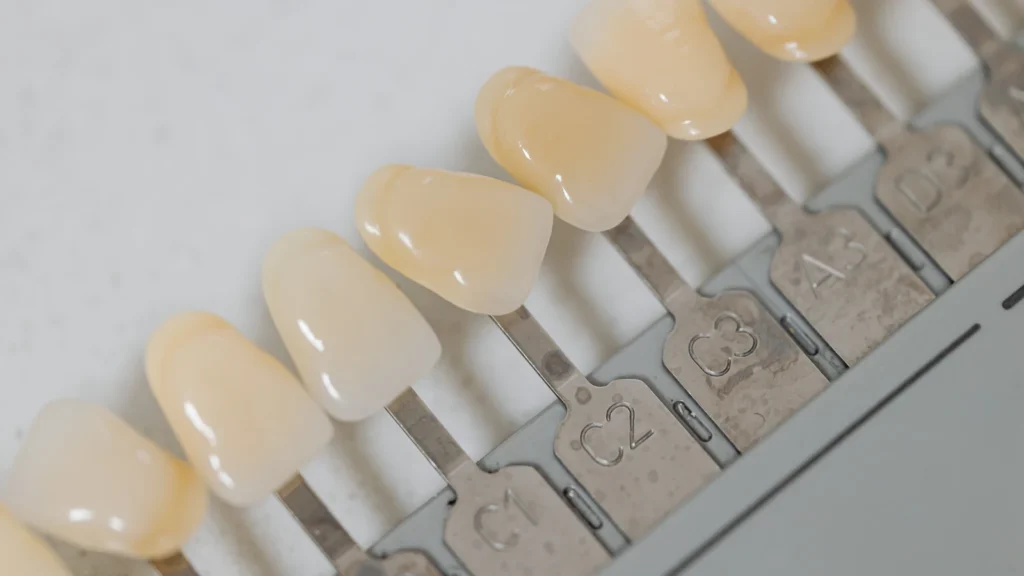
Porcelain Veneers vs Dental Crowns
This basically comes down to how much of the tooth is covered.
Veneers mainly cover the front surface of teeth, often the anterior teeth, that will be visible when you smile.
Crowns surround much more of the tooth.
Crowns are often suggested when a tooth has been weakened by trauma, is filled extensively or has undergone a root canal.
When teeth are healthy but you’re unhappy with how they look using veneers can sometimes save more natural tooth.
Learn more by reading our porcelain veneers vs dental crowns comparison.
Timeline for Porcelain Laminate Veneer Treatment
Treatments can differ, but most will include:
1. Dental consultation
Your dentist will examine your teeth, gums, bite and any existing restorations.
2. Planning treatment
How many teeth you’d like to change, shape, shade, shade selection and desired result are discussed. Photographs may be taken, models made or digital smile design or digital planning performed.
3. Tooth preparation
If necessary a small amount of enamel is removed from teeth to accommodate the veneer.
4. Impression or digital scan
Details about your prepared teeth are sent to the lab.
5. Temporary veneers
To protect your teeth while your veneers are being made you may receive temporary veneers.
6. Fitting your veneers
Your dentist will check the veneers fit properly and match the surrounding teeth.
7. Bonding veneers and bite check
Porcelain veneers are bonded to your teeth. Your bite will be assessed and adjusted if necessary.
Three of our drafts take you through essentially the same consultation-to-bonding process.
Since we have a separate article dedicated to veneer treatment timeline we don’t need to go into more detail here.
Porcelain Veneers Near Me in Turkey
Porcelain veneers are one of the treatments international patients commonly receive in Turkey.
If you’re travelling from the UK understand that porcelain veneers are not porcelain veneers are not the same regardless of where you have them done.
Before you agree to treatment ask questions such as:
How many teeth will be treated?
Are veneers or crowns being placed?
Which porcelain material will be used?
How much enamel will be removed?
Why is this amount of preparation necessary?
Who will make your veneers?
Are temporaries included?
What happens if my veneers need adjusting?
What happens if I need aftercare once I’m back home in the UK?
Clinic A can offer porcelain veneers in Turkey just like clinic B but recommend completely different treatment.
The details are more important than the marketing label.
Cost of Porcelain Laminate Veneers
Prices will change depending on:
Reason
How porcelain veneers cost varies
Number of veneers you get
More veneers usually means a higher overall price
Material
Some dental materials and laboratory processes cost more
Laboratory
Prices can vary depending on the lab producing your veneers
Condition of teeth
Existing dental problems may need to be treated before veneers can be placed
Tooth preparation
More complicated cases can require extra time to plan
Temporary veneers
Are they included in the price?
Additional treatment
Sometimes extra treatment is recommended like gum therapy or whitening
Clinic
Prices dentists charge and advice they give can differ
There isn’t a set price for porcelain veneers. When comparing porcelain veneers in Turkey prices ask about the full dental treatment plan rather than just the cost per tooth.
Lifetime of Porcelain Laminate Veneers
With proper care and a suitable case porcelain veneers can last a patient many years.
Multiple clinical studies our drafts mention report high long term survival rates for porcelain laminate veneers.
How long your veneers last can be influenced by:
Bonding technique used
How much enamel is left on your teeth
Your bite
Whether you grind or clench
Your oral hygiene
Gum health
Trauma to the teeth
Restoration design
How often you visit the dentist
Let’s save extended discussion for the article dedicated to veneer lifespan.
Do Porcelain Laminate Veneers Stain?
Due to the properties of porcelain they are usually resistant to surface staining.
That doesn’t mean your smile won’t change over time. Teeth surrounding your veneers could become discoloured.
Gum recession could expose the margins of your veneers.
You could also start to notice staining around the edges of your porcelain veneers.
These are a few reasons why maintaining good oral hygiene and visiting your dentist regularly is still important.
Can Porcelain Veneers Be Whitened?
Porcelain veneers cannot be whitened like regular teeth.
Porcelain, unlike real enamel, is resistant to stains. Some discoloration can occur in the area around the veneer margins or the bonding material.
Regular professional cleaning will help retain the appearance of porcelain veneers.
Can decay occur under porcelain veneers?
Yes, teeth can decay under porcelain veneers.
The veneer itself can’t get tooth decay. But the tooth underneath can.
Remember veneers don’t usually cover your entire tooth.
Brushing, flossing and regular dental check ups will help keep your smile healthy.
Porcelain veneers should not be thought of as a protective shell that prevents your natural teeth from developing dental problems.
Downsides to Porcelain Laminate Veneers
There can be disadvantages to porcelain veneers. Including:
Tooth prep is usually irreversible
At some point veneers will likely need replacing
Porcelain can chip or break
Debonding
Some patients experience temporary sensitivity
Porcelain veneers may not be ideal if you grind heavily
Not all teeth may need the same amount of preparation
Very dark teeth may require more complex preparation
Compared to resin bonding treatment can be expensive
As with any restoration porcelain veneers can fail if used in an unsuitable case.
An unsuitable case could be the wrong tooth, bite or even gum condition.
This is another reason why picking the right patient for the treatment is as important as picking the right restoration material.
Porcelain Laminate Veneer Care
Cleaning porcelain veneers is very similar to caring for natural teeth.
Brush your teeth regularly.
Keep the spaces between teeth clean.
Make sure your gums are healthy.
And try not to use your veneered teeth for opening packaging or chewing on hard objects unnecessarily. If you grind your teeth your dentist might recommend a night guard.
Regular check ups with your dentist will allow them to monitor the veneers as well as your natural teeth, gums and bite.
Questions Patients Ask About Porcelain Laminate Veneers
Before receiving porcelain veneers you may want to ask:
Why have I been recommended porcelain laminate veneers?
Which porcelain material will be used on my teeth?
How many veneers will I get?
Will any of my teeth need to have enamel removed? Why?
Can my case be treated with minimal/no prep veneers?
Are there alternative treatments like teeth whitening, composite bonding or orthodontics?
Would any of my teeth be better off as crowns?
Is my bite or teeth grinding likely to affect my veneers?
What can I do if one of my veneers chips?
What type of aftercare will I need?
Conclusion
Porcelain laminate veneers are used to change how teeth look.
Cosmetic improvements can include colour, shape, minor spacing, chipped tooth edges and more. All this while covering less of the tooth than a crown would.
Choosing porcelain veneers isn’t always best for every patient.
Some patients may benefit from having something else done before getting veneers. Others could be better treated with cosmetic bonding, orthodontics, porcelain crowns or even E- max veneers / Emax veneers.
While in Turkey patients wondering “how much do porcelain veneers cost?” should also ask:
“What does each of my teeth actually need and why?”
Consultations in Turkey begin with answering questions. Calling gets you answers.