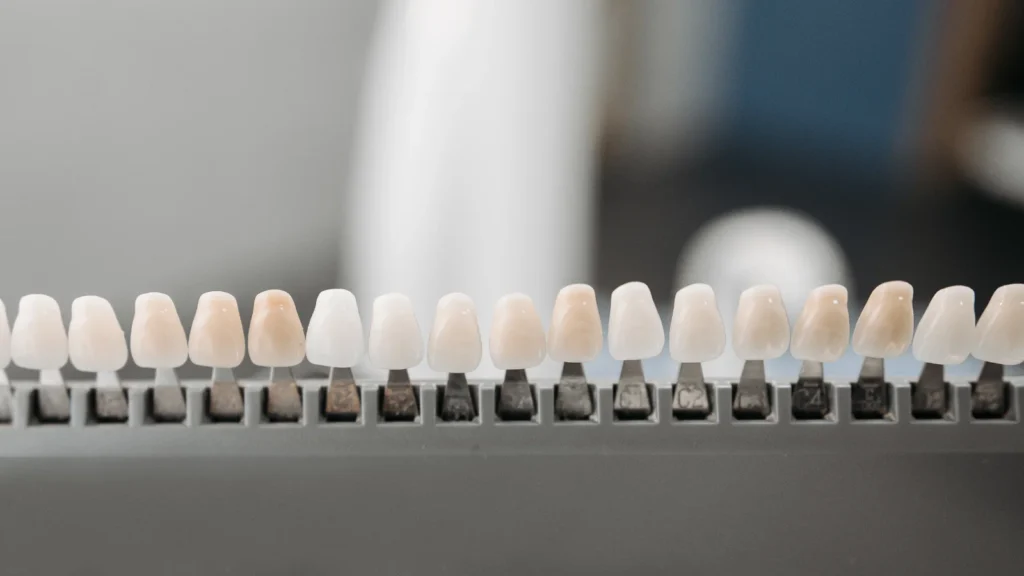
Composite bonding and veneers are two different ways to improve your smile. However, they do this in quite different ways.
Composite usually refers to tooth-colored resin that is added onto the tooth. Veneers are thin coverings that go over the front of the tooth. These are usually made from porcelain or another ceramic material.
This impacts how much tooth prep is needed, how long the process takes, how the restoration handles stains, how repairs are managed and more.
That means the question isn’t so much “which looks better?” Instead, it’s which treatment makes the most sense given your teeth.
This is a common decision in cosmetic dentistry, especially for patients considering a smile makeover or a wider smile transformation.
Composite Bonding vs Veneers: Overview
| Factor | Composite Bonding | Porcelain Veneers |
|---|---|---|
| Material | Builds up tooth structure with special resin | Thin ceramic covers bonded onto the tooth |
| How it works | Sculpted directly onto the tooth | Usually created outside the mouth before being bonded |
| Tooth preparation | Can sometimes be minimal or none | Preparation depends on the case |
| Treatment time | Can be completed quicker in some cases | Can require more appointments |
| Laboratory required? | Usually completed directly by the dentist | Usually made in a lab |
| Stain resistance | Composite stains more easily | Porcelain veneers resist stains better |
| Repairability | Can sometimes be repaired or added to | Repair can be more complex |
| Price | Usually less expensive initially | Typically costs more |
| Longevity | Doesn’t typically last as long | Longer expected lifespan |
| Future treatment | More conservative and easier to update | Prepared teeth usually continue to need restoration |
| Best suited to | Smaller cosmetic changes | Larger changes to your smile |
The details of your situation will influence which option is best. Conservative veneer cases exist. Large bonding cases can require excessive tooth removal and upkeep. Always go by the condition of the tooth, not just the name of the treatment.
What Is Composite Bonding?
Instead of adding a covering onto the tooth, composite bonding involves adding directly to the tooth.
To do this, the dentist will sculpt a tooth-colored resin directly onto the tooth. They will carefully select the shade, prepare the surface to help the material bond, sculpt the composite and harden it with a curing light.
Because this is cosmetic bonding, the quality of the composite material and the dentist’s finishing technique can both affect the result.
It’s called direct restoration because the dentist is making the restoration in your mouth. A cosmetic dentist may use this approach for small changes where preserving tooth structure is important.
Bonding can address issues such as:
- Chipped tooth edges
- Minor gaps between teeth
- Irregular tooth shapes
- Localized wear
- Small stains
- Changing tooth length
- Modifying tooth contour
Bonding is different depending on whether you are repairing one chipped corner or having the front surfaces of your teeth covered with resin. These small repairs are especially common on front teeth.
What Are Dental Veneers?
Dental veneers are typically made outside the mouth and then bonded onto the teeth.
Porcelain veneers are normally manufactured before being bonded to the prepared or planned tooth surface.
Porcelain and laminate veneers cover the front surface of your teeth and allow you to change:
- Tooth shape
- Tooth length
- Colour
- Symmetry
- Proportions
- Certain gaps
- Minor alignment differences
The porcelain shells are bonded to the front surface after planning and any required tooth preparation.
Preparing Teeth for Veneers vs Bonding
When using porcelain veneers, the teeth may need to be prepared. However, not every veneer case requires the same amount of preparation. Some carefully selected veneers can be bonded with very little alteration to the enamel.
Composite can sometimes be added without significant preparation either. However, bonding typically requires some form of surface conditioning.
Because less tooth structure is usually altered, bonding may be more reversible than a prepared veneer, although complete reversibility depends on the individual case.
Does Bonding or Veneers Remove More Enamel?
In most cases, bonding is more conservative and less enamel is removed. Preserving healthy tooth enamel is one reason it can be considered a more conservative treatment.
Many bonding procedures require only surface conditioning or light roughening to help the bonding material adhere.
While bonding is more conservative, some veneer cases can also be completed with very limited enamel preparation.
Exactly how much is removed from your tooth depends on several factors, such as:
- The original position of the tooth
- Your planned tooth shape
- Type of veneer chosen
- Amount of color you want to change
As you can see, it isn’t always easy to say “bonding will only remove _____ from my tooth”. The condition of your tooth is more important than the name of the procedure.
Which Looks More Natural?
Both options can look natural.
The problem isn’t just the material. With bonding, the dentist shapes the material themselves. Layering different shades, texture, polish and shape can all affect the final result.
Veneers can offer more control over the exact color, translucency, surface detail and shape. Ceramics are also usually more stain resistant than composite resin.
However, porcelain veneers don’t guarantee a natural looking smile. Too bright a shade, poor tooth proportions or “matching” veneers can look fake.
Even though we spend more money on ceramic veneers doesn’t mean your smile will automatically look better.
Bonding can blend with your natural teeth if planned well. It all comes down to the dentist and technician designing a suitable treatment plan.
Which Stains Less?
Porcelain veneers have the advantage when it comes to staining.
Ceramic is highly resistant to surface stains from common foods and drinks. Composite resin is generally more likely to pick up staining or lose some of its surface polish over time.
How long before composite bonding changes color? Sometimes never.
But things like poor oral hygiene, surface stains and coffee can dull the shine on bonding quicker. Keeping your bonding polished will also help.
Composite isn’t going to change from white to brown overnight in most cases. But it may lose its shine faster than veneers.
Keep in mind that dental bonding and porcelain do not respond to whitening in the same way as natural teeth. If you want whiter teeth, ask your dentist how veneers or bonding can help before you start any tooth whitening.
Which Material Lasts Longer?
Porcelain veneers are generally stronger and last longer than bonding. But how long does veneers or bonding last? Durability depends on the material, bite, preparation, bonding quality and proper care.
Neither material is invincible. Bonding can chip, debond or wear faster than veneers. Porcelain can also chip or wear.
Why does bonding wear faster? Because it’s softer than porcelain. That also means we can add to, repair and shape bonding with relative ease.
Many factors play into how long either treatment lasts. This includes:
- Your bite
- Tooth grinding or clenching
- Oral hygiene
- Location of the restoration
- Remaining enamel
- Bonding process
- Nail biting or hard object habits
- Maintenance and future care
Bonding usually requires more upkeep, polishing and occasional repairs. Porcelain veneers usually provide a longer lasting color and surface integrity.
For more detail on ceramic restorations, see how long veneers last.
Can You Repair Broken Dental Bonding?
Repairing dental bonding is often easier than repairing porcelain veneers.
A broken off corner can sometimes be repaired with bonding. The dentist can roughen the surface, add more bonding, shape and polish the material.
We don’t always need to replace the entire restoration.
Chips are different for veneers. Small chips can sometimes be polished or managed, depending on where they occur and how extensive they are.
Does that mean veneers can’t be repaired? Not necessarily. But the porcelain may need to be replaced.
Thinking about grinding your teeth at night? This is very important to know if you have veneers or bonding.
Bonding vs Veneers: Cost
Bonding costs less initially because it does not require a dental lab to make your restoration. The dentist typically makes the bonding material directly. The additional lab work needed for porcelain veneers is one reason veneers cost more upfront.
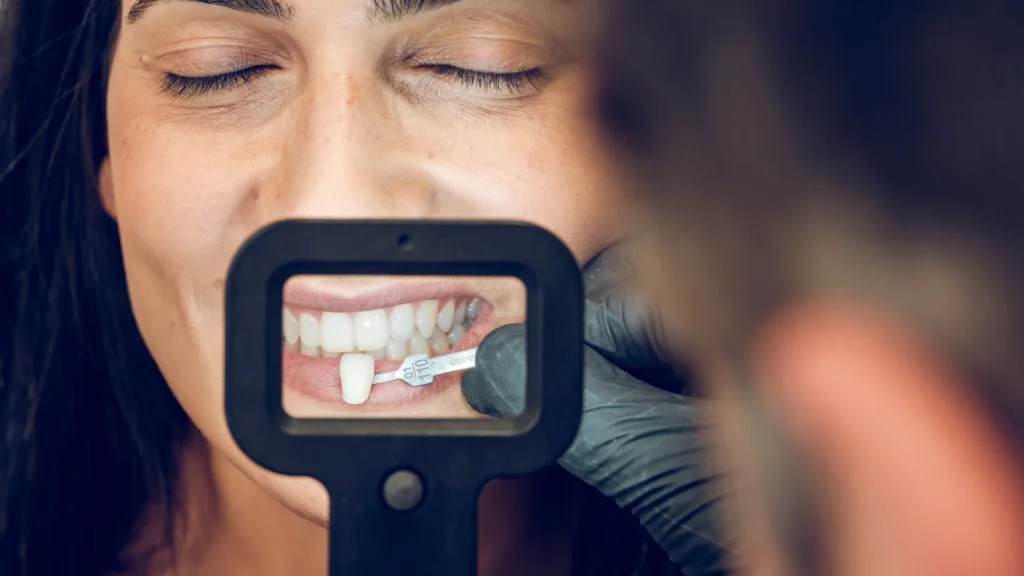
Veneers take more time to plan. Your dentist may need to prepare your teeth, make impressions, have you wear temporary veneers and wait for the lab to build your veneers.
There are more appointments involved when getting veneers.
How Much Does Bonding vs Veneers Cost?
Again, it depends.
Bonding may need future polishing, repair or replacement. Veneers cost more upfront but may need less cosmetic maintenance if they’re performing well.
For someone looking for dental treatment in Turkey, comparing US prices from competitor websites would not provide a useful comparison. What is included in your treatment price matters.
Bonding vs Veneers: Which Is Faster?
Bonding is usually faster.
Small cases can often be done in a single appointment. There is no lab stage so your dentist shapes, cures and polishes the restoration themselves.
Veneers take more time to plan. You may need tooth preparation, impressions or scans and then wait for the lab to build your veneers before they can be bonded.
Digital technology has allowed dentists to speed up parts of the veneer process. However, veneers and bonding are still very different procedures.
Composite Bonding vs Porcelain Veneers: Which Is Better?
Will depend on what you want to improve.
Small chips that don’t impact a lot of the tooth can often be repaired with bonding. For more complex changes, discoloration or multiple teeth that need changing, veneers can be considered.
That doesn’t mean we recommend veneers for every broken tooth. What caused the tooth to break in the first place?
If you have an underlying issue like teeth grinding, bite problems or weak teeth, we may suggest fixing that before we bond anything.
How About Gaps Between Teeth?
Bonding can change gaps. It can close small gaps by adding material to the neighbouring teeth.
But we can only add material to your tooth. If you have a large gap we can make your teeth look too wide by bonding.
Veneers can change the shape and width of your teeth too.
But large gaps between teeth aren’t always caused by the appearance of your teeth. There may be an underlying reason for the space. Getting braces may make more sense than widening your teeth with bonding or veneers.
Can Dental Veneers Cover Discolored Teeth?
Yes, but… veneers can cover certain stains. Porcelain veneers cover the entire front of your tooth.
Bonding can target specific problem areas. While veneers can mask discoloration, we may recommend whitening your teeth first.
Each case is different. Cavities, trauma and superficial staining are all very different. Always try the least invasive suitable solution first.
Can Veneers Fix Crooked Teeth?
Bonding and veneers can improve the appearance of mildly uneven or misaligned teeth, but neither will move your teeth.
Bonding works by adding to the tooth surface. Ceramic veneers change the color you see and shape of your tooth.
Big gaps between teeth or serious rotation may require more bulk added. That could make your teeth look unrealistic or require additional removal.
Crowding or rotation may be better treated with orthodontics before we apply veneers or bonding. That is especially important for younger patients and patients with healthy teeth.
Risks of Composite Bonding
As with any dental treatment, there are limitations with bonding, such as:
- Staining
- Loss of polish
- Chips
- Wear
- Repair or future polishing
- Limited ability to change severe tooth color
- Appearance can be too bulky if too much material is added
- Dependence on dentist’s skill
Decay can also occur on teeth with composite. Simply adding bonding to your tooth won’t make that tooth invincible to decay.
Good oral health remains important whichever cosmetic treatment you choose.
Risks of Veneers
You may hear that veneers come with their own risks:
- Enamel removal if prep is needed
- Sensitivity
- Chips
- Breaking off
- Wear
- Need to replace them down the road
- Higher cost
- Tooth prep makes the procedure harder to reverse
- Maintaining healthy gums around the veneer
You should never get a veneer just to hide dental disease or decay. Visit your dentist to treat those issues first.
Can You Replace Bonding With Veneers?
YES! In most cases composite bonding does NOT mean you are ineligible for porcelain veneers in the future.
The dentist will look at:
- How much bonding you have
- Condition of your natural tooth
- How much enamel you have left
- Position of your teeth
- Your bite
- Reason you want bonding replaced
Sometimes we can remove existing bonding before your veneers are placed. Other times the prepared and restored areas may affect how much prep is needed.
Bottom line: getting bonding done does not mean you never get veneers.
When To Consider Composite Bonding?
Having cosmetic changes done to your teeth is a personal decision. But bonding might be a good option if:
- You only want to change a small area of your smile
- You want to preserve as much tooth as possible
- You need to repair a chipped tooth or edge
- You want to close a minor gap
- You know it can stain and require upkeep
- You want something that can often be added to, shaped and repaired
- The lower cost is important to you
When Are Dental Veneers a Good Idea?
Veneers might make sense if:
- You have multiple teeth that need corrected
- You need to change the color of your teeth significantly
- You don’t mind having your enamel prepared
- You want stain resistance
- You need to change tooth shape and proportions
- Bonding chipped or hasn’t lasted long
- You accept that they’ll need to be repaired or replaced in the future
Does that mean veneers are always better than bonding? No!
It just means veneers handle certain goals better than composite bonding.
Questions to Ask Your Dentist
Regardless of if you need bonding or veneers these are questions to consider:
- What exactly are we trying to fix?
- Is tooth whitening or orthodontics an option?
- How much of my enamel will be affected?
- Will I need drilling done for bonding? Does the veneer require prep?
- Can I see before and after pictures of similar cases to mine?
- How will my bite affect bonding vs veneers?
- Do I grind or clench my teeth?
- If part of my restoration breaks, what can be done?
- How long before my bonding may need polished or repaired?
- What if I someday want the veneers replaced? Can that be done?
- What does the price include?
Deciding Between Bonding vs Veneers
There isn’t a single treatment that will work for every patient. You may only have one tooth that needs changed and wouldn’t benefit much from veneers.
Someone with more generalized cosmetic concerns might not get as much benefit from bonding.
Take your goals into account when deciding. Aesthetic goals are important but so is your biology.
How much tooth will need to be removed or changed? How big is the correction you want?
Stain resistance? What forces will your restoration have to withstand? Are you okay with upkeep and future restoration?
Asking these questions will help you learn more than “is veneers better than bonding?”
Sources
- Anterior composite restorations: A systematic review on long-term survival and reasons for failure — Dental Materials. View on PubMed
- Long-Term Survival and Complication Rates of Porcelain Laminate Veneers in Clinical Studies: A Systematic Review — Journal of Clinical Medicine. View on PubMed
- Clinical performance of laminate veneers: A review of the literature — Journal of Pro