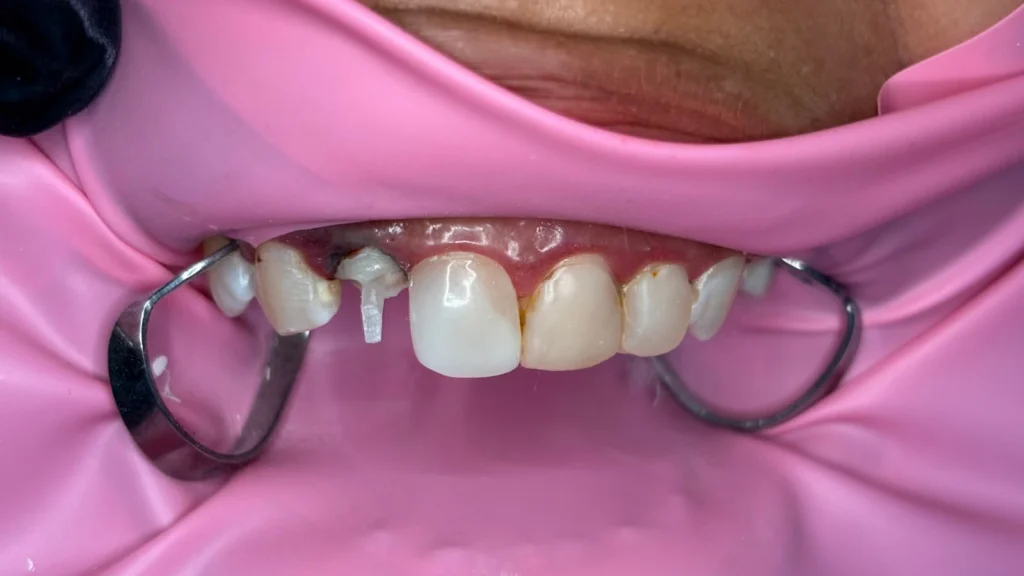
Exactly how long can depend on many factors.
Bonding may last many years but also look completely different after that time.
The tooth it’s placed on, your bite, and how well you maintain it all play a role.
As you can imagine, asking “how long does composite bonding last?” doesn’t have a single straightforward answer.
Cosmetic bonding can often last around 5 to 10 years before it needs some form of maintenance or repair. This is a practical range but shouldn’t be treated as an expiry date.
Material doesn’t just fail because it reaches a certain age.
Gradual changes like reducing shine, staining along the edges, wear or small chips can occur long before the entire restoration needs replacing.
The average lifespan of your bonding will be affected by a number of factors we’ll go into below.
Let’s start with the basics.
how long does composite bonding last??
Composite bonding material is made from resin that is bonded directly onto the natural tooth.
This composite resin is commonly used for tooth bonding in cosmetic dentistry because it can be shaped directly on the tooth.
Unlike porcelain veneers, composite bonding can be shaped, repaired and polished relatively easily.
The trade-off is that composite doesn’t usually have quite the same lifespan as ceramic or porcelain before cosmetic changes occur.
Its durability can still be good with proper care, but the material may need touch-ups or replacement over time.
Where on your tooth the bonding is placed, how much is used and your bite will impact how long your bonding lasts.
Someone who grinds or clenches their teeth will probably find their bonding wears quicker than someone who doesn’t.
Similarly someone who regularly consumes staining drinks like coffee and red wine or has poor oral hygiene may notice cosmetic changes quicker.
Factors That Affect How Long Composite Bonding Lasts
How Long Dental Bonding Typically Lasts – Summary
Factors that can influence the lifespan include:
- Bonding placed on molars where you have a heavy bite force
- A large amount of composite bonding used to reshape many teeth
- Someone who clenches or grinds
- Poor oral hygiene
- Frequent exposure to staining drinks
- Significant wear, stain or damage to the underlying tooth
- Bonding that hasn’t been shaped smoothly
- Routine maintenance and polish to remove stain
Every patient is unique and even two patients that get bonding done on the same day can have very different experiences down the track.
Patient A may still only require a polish 5 years later.
Patient B may have already had one repair completed.
What Does Composite Bonding Look Like After 5 Years?
Exactly how it looks can vary depending on your circumstances.
Does Composite Bonding Still Look Good After 5 Years?
Bonding will not always look damaged or need replacing after 5 years.
That being said five years is often around the time when cosmetic changes start to become noticeable.
The surface may not be quite as shiny.
You may start to notice mild discolouration or darker edges.
Small chips and rough spots can become evident long before the whole restoration needs replacing.
Depending on the situation sometimes none of the above issues are serious enough to warrant replacement.
Getting your bonding polished may improve the surface appearance and remove some staining.
Smaller damaged areas can sometimes be repaired by adding more composite rather than replacing the entire restoration.
When patients ask “how long does bonding last?”, they’re often thinking about how long it lasts before it looks good.
As you can see from the above, the functional lifespan of bonding and its cosmetic lifespan are two different things.
Something can still function perfectly and protect the tooth but not look “new” anymore.
Does Composite Bonding Look Good After 10 Years?
As above, it depends.
Some composite restorations can still look fine at ten years. Others may start to show significant wear much earlier.
Remember cosmetic bonding is not always a one-size fits all solution. Don’t assume just because your dentist can bond your tooth that ten years will be appropriate in your case.
Ask questions about why your situation may be different from someone else who had bonding done recently.
What factors in your mouth will increase or decrease its longevity?
The Size and Location of Composite Bonding Matter
Does Where You Get Bonding Done Matter?
YES. Where you get bonding placed can make a huge difference.
Think about bonding used to close a small gap between two front teeth versus composite bonding added to the biting edge of a tooth.
Every restoration is unique but edge bonding on a front tooth is going to receive loads of force each time you bite down on food.
The size of the bonding also matters. A small repair will typically have very different requirements to larger bonding that covers the front and biting edge of an entire tooth.
A chipped tooth repaired with a small amount of resin may behave differently from larger bonding on back teeth where chewing forces are higher.
Size & Location Don’t Dictate Lifespan
This doesn’t mean because you have large bonding that it will wear down or chip early.
Including where you get bonding and how much will help give a more realistic idea of expected lifespan.
Will I Have to Replace My Composite Bonding Because I Grind My Teeth?
This can be the case for some patients.
Bruxism is the term used for grinding or clenching the teeth, and in some cases a dentist may recommend a night guard.
Grinding and clenching can subject your bonding to additional pressure.
Over time this can lead to chipping, wear and even debonding — bonding falling off.
Some people grind their teeth without realising while awake but much grinding can also happen during sleep.
Signs you may be grinding include:
- Wear facets on your natural teeth
- Jaw or cheek muscle pain
- Broken teeth or restorations
If you think your grinding or bite may cause problems with your bonding, your dentist may recommend a protective mouthguard to minimise the pressure placed on your teeth.
Does Composite Stain or Change Colour Over Time?
Yes! Bonding stains differently than natural teeth.
Generally speaking, composite can stain over time.
Coffee, tea, red wine and smoking are common staining agents that can change the colour of composite.
Composite is less stain-resistant than porcelain, especially with frequent exposure to tobacco products and dark drinks.
You can reduce the risk by maintaining good oral hygiene, brushing and cleaning between your teeth.
Does the Material Composite Bonding Is Made Of Matter?
Not necessarily.
Bonding is usually made from resin. Different brands use slightly different formulations of that resin.
Bonded restorations are generally made from resin-based composite material.
Bonding is not technically porcelain but can be made to match its appearance very closely.
Can You Whiten Teeth With Composite Bonding?
You can’t whiten composite the same way you can natural tooth enamel.
Standard home teeth whitening treatments work on natural teeth but have no effect on dental resin.
Whitening changes natural enamel rather than the composite resin itself.
If you get bonding on your front teeth matched to your original shade and then decide to get your teeth whitened a few months later, your natural teeth may become lighter while leaving the bonding dark in comparison.
If you’re considering whitening and cosmetic bonding make sure you discuss which order you should do them in with your dentist.

Can Decay Happen Underneath Composite Bonding?
Bonding does not protect teeth from decay.
Plaque can still collect along the edges of your restoration if you don’t keep your teeth clean.
Sometimes the margins where the bonding meets your tooth can change over time and should still be checked regularly.
Just because you can’t see decay from the front, doesn’t mean it isn’t happening under the restoration.
Preventative maintenance is still important with bonded teeth.
Good oral health helps protect the natural tooth and the margins around the bonding.
Early Problems With Composite Bonding vs When To Replace
While age can be a factor, poor dental hygiene is likely to cause problems with bonding sooner.
Other issues like clenching, bite problems or stains from smoking can also affect the restoration.
Ask your dentist if you think something may impact the life of your bonding before treatment.
Does Your Dentist’s Placement Technique Matter?
Every dentist has slightly different preferences when placing cosmetic bonding.
How long your bonding lasts will be affected by more than just the material used.
Good preparation, proper isolation, correct bonding and shaping technique will all impact how your restoration functions and ages.
Composite material is just one part of the equation.
Who Is More Likely To Need Maintenance Done On Their Composite Bonding?
Again there’s no cut-and-dry rules but some patients are more likely to notice cosmetic changes or need maintenance done on their bonding.
Patients may need more maintenance when they:
- Grind or clench
- Have strong bite forces
- Have large bonded areas
- Smoke
- Regularly consume staining drinks
- Have poor oral hygiene
- Frequently damage their front teeth
- Miss regular dental reviews
Do You Have to Avoid Certain Foods With Bonding?
Not always but because bonding is made of resin you should take extra care of your teeth when bonding.
While you don’t have to avoid hard foods permanently you may damage your bonding if you bite hard objects regularly.
Are ice, pens, fingernails and using your teeth as tools bad for your teeth? Answer: yes.
The same applies to teeth whitening if you get bonding done and then want to whiten your teeth.
Take extra care and keep up with maintenance and dental checkups to catch small problems before they become big ones.
Asking your dentist if anything will affect your dental bonding before you get it done is always advisable.
How To Make Your Composite Bonding Last
Thankfully you don’t need to follow an extreme dental routine to keep your bonding in tip-top shape.
Here are some ways to prolong the life of your composite bonding.
Keep Your Teeth Clean
Brush regularly with an appropriate toothpaste. Don’t forget to clean between your teeth.
A non-abrasive fluoride toothpaste can help clean the teeth without unnecessarily roughening the composite surface.
Stop Using Your Teeth As Tools
Avoid biting hard objects.
Don’t Ignore Really Hard Foods
You can technically bite into hard foods with bonded teeth.
But if you bite something hard enough you can damage both your natural teeth and bonding.
Be careful if you have teeth that have been bonded because they may not tolerate every force in the same way as before.
Get Help for Teeth Grinding If Applicable
If your dentist identifies grinding or clenching, discuss whether your bite or restorations need additional protection.
Limit Staining Exposure Where Possible
If you regularly consume coffee, tea, red wine or smoke you’ll probably stain your teeth quicker than someone who doesn’t.
Again, you don’t have to avoid these things forever. Just be prepared to spend more time cleaning your teeth and maintaining the bonding.
Regular Dental Checkups
Keep up with your regular maintenance and dental reviews.
Professional cleaning by a dentist or hygienist can also help control surface stain and plaque around the bonded edges.
If your bonding starts to feel rough or chip it’s easier to repair early. If you wait until a large section has fractured off it will require more work to repair.
How Long Should You Leave Between Dental Polishes for Bonding?
How often you need your bonding polished depends on you and your dentist.
If you regularly drink coffee and struggle to keep your teeth white you may benefit from polishing more often.
Each patient is different. If your bonding starts to show signs of surface stain or reduced shine bring it up at your next appointment.
The dentist can check the surface smoothness, margins, staining and signs of wear.
Does Your Dentist Have to Replace Your Bonding Just Because It’s Been 5 Years?
Nope.
Your dentist shouldn’t recommend replacing your dental bonding based on age alone.
When Composite Bonding Gets Old – What Are Your Options?
Whether you need a simple repair or replacement depends on the condition of the bonding and the tooth underneath it.
Polishing
If your bonding is intact but starting to show mild signs of surface stain or loss of shine, polishing can improve the appearance.
Small Repair
Sometimes just a small area will chip off. The dentist can sometimes repair this by adding more composite to the affected area.
Reshaping
Slight wear or rough spots can sometimes be smoothed out without needing to replace the entire restoration.
Replacement
Dental bonding will eventually need to be replaced in some cases.
Your dentist may recommend replacing your bonding if:
- It’s extensively worn
- Multiple areas are damaged
- Staining can’t be improved
- There is decay present
- The margins have deteriorated
- You don’t like how it looks
When To Replace vs Repair Broken Composite Bonding
Remember cosmetic bonding can often be repaired when needed.
If only one area is damaged we don’t always have to start from scratch.
Signs Your Composite Bonding Needs Attention
There are a few signs that your bonding needs checking by your dentist:
- Sharp or rough edges
- Bonding that has chipped off
- Visible cracks or fractures
- Dark staining along the margins
- Noticeable discolouration over time
- A gap developing between your tooth and composite
- Sensitivity in the bonded tooth
- Your bite feels different
- The restoration feels loose
- Floss gets caught around the bonding repeatedly
A cosmetic issue isn’t always something that needs urgent attention.
However things like new sensitivity, movement or suspected decay should be checked rather than simply polishing the bonding.
Bonding Keeps Breaking, What Do I Do?
Let’s face it, cosmetic bonding isn’t cheap.
If you constantly have your bonding repaired you should speak to your dentist. There could be an underlying cause that needs addressing.
Bonding that keeps breaking or chipping may be caused by:
- Heavy bite forces
- Teeth grinding or clenching
- Not enough supporting tooth structure
- The size of the bonding
- The position of your tooth
- Material limitations
- An underlying problem with your tooth
Will Dental Bonding Look the Same Forever?
Bonding is added to the existing tooth.
The restoration itself can change over time due to wear, polishing, staining and maintenance.
Can You Remove Dental Bonding To Get Back To Your Natural Teeth?
Bonding is generally more conservative than treatments that require removing more enamel.
Compared with treatments involving enamel removal, bonding can often preserve more natural tooth structure.
It’s not quite as simple as just peeling your bonding off and you’re done.
Removing bonding still requires carefully separating the existing resin from your natural teeth.
Depending on the case your tooth may have been chipped, worn or already reshaped prior to getting your bonding placed.
Can Bonding Be Used Instead of Veneers?
Composite bonding vs veneers comes down to your goals.
Bonding is one of several cosmetic dental treatments that may be considered as part of a wider smile makeover or treatment plan.
Porcelain veneers are usually more stain resistant than composite and have a longer expected lifespan.
They can offer great results but may not be appropriate for every situation.
Porcelain veneers often require removal of a small amount of enamel.
Composite bonding usually requires less removal of your natural tooth structure.
Composite can be easier to repair if you damage your bonded tooth.
Porcelain veneers are usually more expensive and take longer to place than bonding.
Bonding
- Easier to repair
- Generally lower cost
- Quicker treatment
- Changes can often be made later on
Porcelain Veneers
- More stain resistant
- Can provide a more durable surface
- Longer lifespan in many cases
Which Is Best for You?
Only you and your dentist can decide which is right for your smile.
Just because veneers last longer doesn’t mean someone with a small chip needs ceramic veneers on their front teeth.
Every case is unique and your dentist should recommend what they feel is appropriate for your particular situation.
Some people want the longest possible cosmetic lifespan with minimal maintenance. Others would prefer saving time and money where possible and are okay with the material potentially needing replacement down the track.
It’s a balance of your tooth, the size of the correction needed and what you personally value more.
Should You Get Bonding If It Will Eventually Need Replacing?
Composite bonding can still make sense even though it may require future maintenance or replacement.
Bonding is often chosen because it is conservative, repairable and flexible.
Small chips can sometimes be repaired without committing a healthy tooth to a more extensive restoration.
As long as you understand the possibility of future repair or polishing, the expected maintenance can be considered as part of the treatment decision.
How Long Can You Expect Dental Bonding To Last – Take Home Message
Composite bonding does not all wear at the same rate. How long your bonding lasts can be affected by many factors we discussed above.
The most important thing to take away is composite bonding will often give you signs that maintenance is required before it needs replacing.
If your bonded tooth starts to lose its shine, you notice a small chip or catch your fingernail on the edge, getting these problems dealt with early can often mean your dentist is able to polish or repair your existing bonding.
Versus waiting until large portions have chipped off and you need a more substantial repair.
Extending the lifespan of your composite doesn’t mean trying to make your bonding last forever.
It means keeping it healthy, functioning and looking good for as long as is reasonably possible without harming the tooth underneath.
Sources
- Cleveland Clinic — Dental Bonding — medically reviewed guidance covering composite bonding, procedure, aftercare and the typical 3–10 year maintenance/replacement range. (Cleveland Clinic)
View Cleveland Clinic source - Anterior composite restorations: A systematic review on long-term survival and reasons for failure — Dental Materials. The review evaluated long-term clinical survival and common causes of failure in anterior composite restorations. (PubMed)
View on PubMed - Success and Survival of Composite Resin Restorations for the Management of Localized Anterior Tooth Wear: A Systematic Review and Meta-Analysis — 2024 systematic review reporting that these restorations require long-term monitoring, repair or replacement. (PubMed)
View on PubMed