How Long Do Veneers Last
Porcelain veneers often last around 10 to 15 years. Composite veneers generally last between 5 and 7 years. University of Rochester Medicine gives the same general planning ranges while noting that porcelain typically lasts longer and composite may wear sooner.
But those are only estimates.
Some veneers may last much longer. Some much shorter.
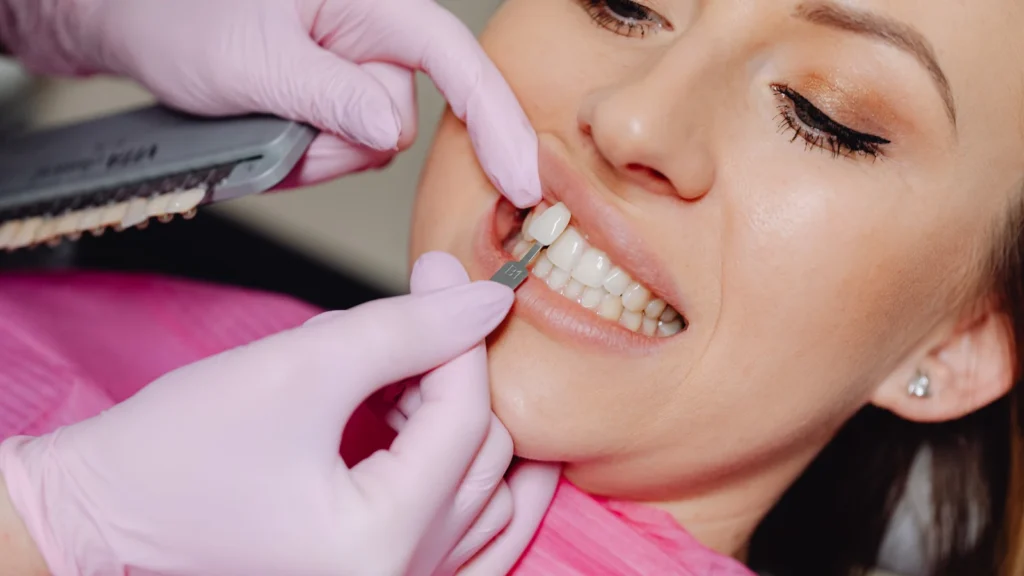
Dental veneers are thin shells placed over the front surface of natural teeth as a cosmetic treatment. The average lifespan of veneers depends on the material, material quality, the tooth underneath and how they are cared for over time.
What Determines Veneer Longevity?
When it comes to veneers… how long they last depends on much, much more than just the material alone.
Your bite, enamel health, preparation design, bonding surface, gum health, oral habits, dental care and amount of correction required can all play a role in how long your veneers look good AND function properly.
Instead of asking “how long do veneers last?”, you may want to read:…
“What affects the lifespan of veneers?”
How Long Does Each Type of Veneer Last?
| TYPE OF VENEER | TYPICAL PLANNING RANGE | LONG-TERM ISSUES |
|---|---|---|
| Porcelain veneers | 10–15+ years | Chipping/debonding, gum recession, underlying tooth problems |
| E-max veneers | 10–15+ years | Bonding failure, bite forces, fracture, gum recession |
| Composite veneers | 5–7 years | Staining, wear, loss of polish, small chips |
| Minimal-prep or no-prep veneers | Varies | Case selection, bonding surface, bite forces, material |
These ranges are useful for planning rather than guarantees. A 2021 systematic review involving 6,500 porcelain laminate veneers estimated cumulative survival at 95.5% at 10 years. A newer meta-analysis also found high long-term survival for lithium-disilicate ceramic veneers. (PubMed)
If you have a ten-year-old veneer that looks and feels good, there is no obligation for your dentist to automatically replace it just because “it is ten years old”.
Likewise, if you have a veneer that is only two years old and has come off or there is a problem with the tooth underneath, you will probably need to have it treated.
Let’s look at how long each type of veneer lasts.
Porcelain Veneers
Porcelain veneers are known for their excellent long-term durability.
Clinical studies have shown they have high survival rates after 10 years.
The material is stain-resistant and can resist wear. Plus it holds its shape and polish well.
Expectations for porcelain veneers are usually high.
But as we mentioned above, porcelain is only one part of the treatment.
The tooth underneath is equally important.
Since veneers are bonded to your natural teeth, several other factors play a role in how long your porcelain veneer will last:
- Remaining tooth enamel
- Preparation design
- Bonding technique
- Bite forces
- Oral habits such as grinding/clenching
- Dental health
You could have the strongest porcelain veneer in the world.
But if it’s bonded to a weakened tooth or bad bite, it’s more likely to fail.
Can Porcelain Veneers Last 20 Years?
YES.
Some porcelain veneers remain serviceable for decades. Long-term clinical research has followed porcelain laminate veneers for periods extending up to 20 years.
But that doesn’t mean they automatically last 20 years+.
Decades down the road, many different changes can occur to your veneer as well as the teeth and gums around it.
Yellowing of adjacent teeth, receding gums, discolouration around restoration margins and even problems with the underlying tooth can affect the longevity of your veneers.
E-Max Veneers
E-Max veneers are another type of ceramic veneer.
They are specially manufactured from lithium disilicate glass ceramic.
Many people opt for E-Max veneers due to their strength and aesthetic appeal.
In general, E-Max veneers last a long time.
How long is relative to each patient.
The ceramic alone isn’t what guarantees your veneers a long lifespan.
The amount of remaining enamel, quality of the bond, your bite and oral hygiene all matter.
Modern systematic-review data show high long-term survival for lithium-disilicate laminate veneers, while also showing that outcomes depend on more than material choice alone. (PubMed)
In short:
Material Matters – But so Does Your Bite, Prep Design and Oral Health.
Composite Veneers
Prospective patients often choose composite veneers because they are less expensive than porcelain veneers.
They can also be placed in one appointment rather than at least two visits like porcelain veneers.
That being said, they don’t usually last as long.
Composite resin veneers are also more prone to staining, surface wear and loss of polish than porcelain. University of Rochester Medicine lists an average planning range of approximately 5–7 years for composite veneers.
And because the material is different than porcelain, they typically require more maintenance.
Research into resin-composite laminate veneers also reports surface roughness, colour mismatch and marginal discolouration among common long-term complications.
Material Selection Is Important But…
…the CONDITION of your teeth is just as crucial.
Preparation, Oral Habits & More!
Lets go back to our original question:
“How long do veneers last?”
The short answer:
It depends.
Materials are important.
Your dental condition matters just as much!
Tooth Preparation
Healthy enamel allows the veneer to be bonded more securely.
Too little enamel and you’re at a higher risk for veneer failure.
Conservative preparation is preferred when possible.
Every smile is different.
Some require more reduction than others.
The NHS notes that fitting some veneers involves removing a small amount of the front surface of the tooth, while not all veneers require the same preparation.
Bite Forces
Another thing to keep in mind is your bite.
Incorrect bite forces can cause your veneers to:
- Chip
- Crack
- Debond
Teeth Grinding Plays a Role
Also known as bruxism, if you grind your teeth your veneers are susceptible to damage.
Teeth grinding or clenching, particularly during sleep, can shorten veneer lifespan.
Long-term clinical research has found significantly higher failure risk in porcelain veneers among patients with bruxism.
Depending on how severe your grinding is, you might still be able to get veneers. But your dentist will need to take that into consideration when planning your treatment.
A customised night guard or another suitable mouthguard may be recommended to protect your veneers and reduce repeated pressure on the front teeth.
Gum Health
Ideally your gums are healthy and even around your teeth.
Gum recession could cause your veneer margins to show once they become exposed.
Another thing to note is if you’ve had your veneers for a long time, your gums could naturally recede with age. This isn’t always the case. But its possible.
Smoking can also affect oral health and gum health, including the tissues around the gum line. Long-term veneer research has also reported greater marginal discolouration among smokers.
Tooth Health
Dental problems don’t stop once you get veneers.
You can still get tooth decay on the parts of your tooth not covered by your veneer.
Your dentist might have to remove your veneer to treat the problem.
The American Dental Association specifically notes that cavities can still develop under or around a veneer.
Why Do Some Veneers Fail So Soon?
No two smiles are alike.
Even if you and your twin decided to get veneers, they probably won’t be exact replicas of each other.
Same thing applies for patients that get veneers.
Someone else can get the same type of veneer on their teeth and have completely different results.
As you learned earlier, veneers aren’t guaranteed a certain number of years just because they’re made out of a certain material.
Daily Habits
Much like dental health, patients who take care of their veneers by keeping good oral hygiene will typically have them last longer.
Good home care, regular brushing and flossing and routine dental check-ups help protect both the teeth and veneers.
Long-term aftercare is therefore part of maximising the lifespan of veneers.
Do Veneers Last Forever?
Veneers do not last forever.
Remember how we said veneers shouldn’t be viewed as a predetermined number of years?
Think of them as long term dental restorations attached to your natural tooth that will require maintenance.
At some point, they may need:
- Polishing
- Repair
- Rebonding
- Replacing
Different veneers will have different lifespans.
There is no defined “replacement year”.
Unlike dental crowns, which cover much more of a tooth, veneers generally cover the front surface. NHS guidance similarly describes veneers as thin restorations covering the front surface of the tooth.
The edge of the veneer is called the margin.
After 10 Years
If you had porcelain veneers put on 10 years ago and they still look good with no complications what so ever, they may not need to be replaced.
When veneers age, normal wear and tear can start to happen that makes you want them replaced.
Darkening around the edges, chipping and wear are some of the things that may occur.
Your dentist will likely replace your veneers if there are problems.
After 20 Years
Again, veneers do not last forever.
But depending on their condition your dentist may still be able to save your existing veneers.
If your veneers have been in for 20+ years and you want a change your dentist can likely replace them.
Your teeth, gums and bite may have changed over the years, so the new dental restorations need to be planned around your mouth as it is now rather than how it looked 20 years ago.
When Do You Know If Your Veneers Need To Be Replaced?
Like we stated above, there’s no exact time when you know your veneers need replacing.
You may come in for a routine checkup and your dentist notices your veneer has came loose or there’s decay under it.
Or you could have sharp pain when you bite down.
A veneer may also chip or crack, develop visible gaps or start feeling different when you bite.
These are signs something’s wrong.
Regular dental visits and dental checkups can help find some problems before they become more serious.
Do Old Veneers Have To Be Replaced?
If there are no problems with your veneers, they may remain clinically sound for many years without replacement.
But if you notice something isn’t right with your veneers, your dentist may need to remove them to examine the tooth underneath.
Replacing your veneers doesn’t necessarily mean starting from scratch.
Your dentist will look at your existing teeth and veneers to determine what needs to be done.
Can Veneers Be Replaced Multiple Times?
Veneers can be replaced more than once.
As mentioned above, each situation is different.
Your dentist will have to take into account how much enamel you have left over.
This is one reason preserving healthy tooth enamel during the original cosmetic dentistry treatment can matter later.
Do Teeth Decay Underneath Veneers?
While porcelain doesn’t get cavities, your actual tooth can.
Because veneers don’t cover the entire tooth you are susceptible to decay.
If you’ve had veneers for years and happen to neglect good oral hygiene, you can decay along the edges.
Regular brushing, flossing and dental checkups are still important after veneer treatment. The ADA recommends brushing with fluoride toothpaste and cleaning between teeth daily because cavities can still occur around veneers.
Can You Eat Normal Foods With Dental Veneers?
Yes, most patients can return to a normal diet with veneers.
But veneers are still dental restorations and they can chip or fracture.
Hard foods and hard candies can place unnecessary pressure on the edges of front veneers.
Avoid biting extremely hard foods or objects directly with your front veneers when it can reasonably be avoided.
The ADA also advises people with veneers to avoid biting fingernails and chewing hard objects or foods.
Can You Drink Coffee With Dental Veneers?
You sure can!
Although porcelain veneers are stain-resistant they are not completely immune to changes around them.
Make sure to keep up with good oral hygiene by brushing your teeth at least twice a day and flossing once a day.
Coffee, tea, red wine and other staining foods and drinks can affect nearby natural teeth and can be more noticeable on composite resin veneers.
Since coffee is stain causing, just know that the natural teeth next to your veneers may also change colour as you get older.
Do Veneers Make Your Teeth Worse?
Not automatically.
Veneers cover the front surface of your tooth, but some types require removal of natural enamel before placement. That change may be irreversible, which is why treatment planning matters.
The natural tooth underneath is also still vulnerable to decay.
Just because you have veneers, doesn’t mean you shouldn’t brush and floss regularly.
Good oral hygiene and ongoing dental care remain important for both your veneers and oral health.
Can You Bite an Apple With Veneers?
Yes you can eat softer and normal foods with veneers.
But I wouldn’t recommend using your front teeth with veneers to crunch on nuts, ice or other extremely hard foods.
Your back teeth are generally better suited to heavier chewing forces than your front teeth.
In fact, using your front teeth as tools can compromise your veneers.
Veneers cover the front surface rather than replacing the whole tooth.
The Rest of the Tooth Needs to Be Cared For Too.
Brushing, flossing and maintaining good oral hygiene is just as important after you get veneers as it was before.
Take Care of Your Teeth & Smile!
Similar to natural teeth, veneers can last a very long time.
Just remember to brush twice a day, floss daily and maintain a healthy diet.
A soft toothbrush and non-abrasive toothpaste can also be useful parts of veneer home care. Cleveland Clinic recommends a soft-bristled toothbrush, nonabrasive fluoride toothpaste, flossing and routine dental visits for veneer care.
Protect your veneers from avoidable damage and keep up with regular dental care.
Do You Really Need Dental Veneers?
While veneers can improve the appearance of chipped or cracked teeth, there are some dentists who may not recommend them.
Why?
If you already have healthy enamel your dentist may want to preserve as much of your natural tooth as possible.
Also, if you have gingivitis or active gum disease your dentist will want you to address that before getting veneers.
If your concern is limited to tooth colour, small gaps between teeth or minor shape changes, a cosmetic dentist may also discuss alternatives such as teeth whitening, orthodontics or composite bonding before recommending veneers.
The aim of cosmetic dentistry is not necessarily to choose the most extensive treatment.
It is to choose an appropriate treatment for the problem being treated.
University of Rochester Medicine also notes that untreated cavities, gum disease, frequent grinding and significant tooth damage can affect whether veneers are appropriate, and identifies whitening, bonding and orthodontic treatment as possible alternatives in some cases.
Does Getting Veneers Hurt?
Patients often wonder…
“How painful is the veneer procedure?”
Will I feel pain when I get veneers?
Will they hurt after?
These are common questions we hear.
Local anaesthetic may be used when tooth preparation is required, and individual experiences can vary.
Your dentist should explain what to expect before treatment begins.
For UK patients, the General Dental Council requires dentists to explain relevant treatment options, risks, benefits, prognosis and costs as part of valid consent.
Do Dental Veneers Hurt Afterward?
Since your mouth may still be numb after your appointment you may be curious about how it will feel as the numbness wears off.
During your appointment your dentist will provide you with aftercare instructions.
Take them very seriously.
Temporary sensitivity or discomfort can occur after dental treatment.
If pain is severe, persists or becomes worse, contact your dentist rather than assuming it is a normal part of veneer treatment.
Conclusion
So how long do veneers last?
As you can see, many different factors go into how long your veneers last.
Don’t worry if you’ve already had your veneers for years and they don’t look as good as they once did.
Your dentist can assess whether polishing, repair or replacement is appropriate and whether new restorations need to be matched to natural teeth that have changed colour.
Similar to natural teeth, veneers do not guarantee a set number of years.
Take pride in your smile and practice good oral hygiene.
Proper care, brushing and flossing, protection from excessive forces and routine dental visits can all help maximise the life of your veneers.
Medical Sources & References
University of Rochester Medicine — Should I Get Veneers? Consider These 5 Things First. University medical centre guidance covering porcelain and composite lifespan, suitability and alternatives. University of Rochester Medicine — Veneers (University of Rochester Medicine)
NHS — Dental Treatments. Official UK guidance explaining veneers, tooth preparation and how veneers differ from other restorations. NHS — Dental Treatments (nhs.uk)
American Dental Association — Veneers. Clinical patient guidance on veneer care, cavities, staining, hard foods and sports protection. ADA MouthHealthy — Veneers (MouthHealthy)