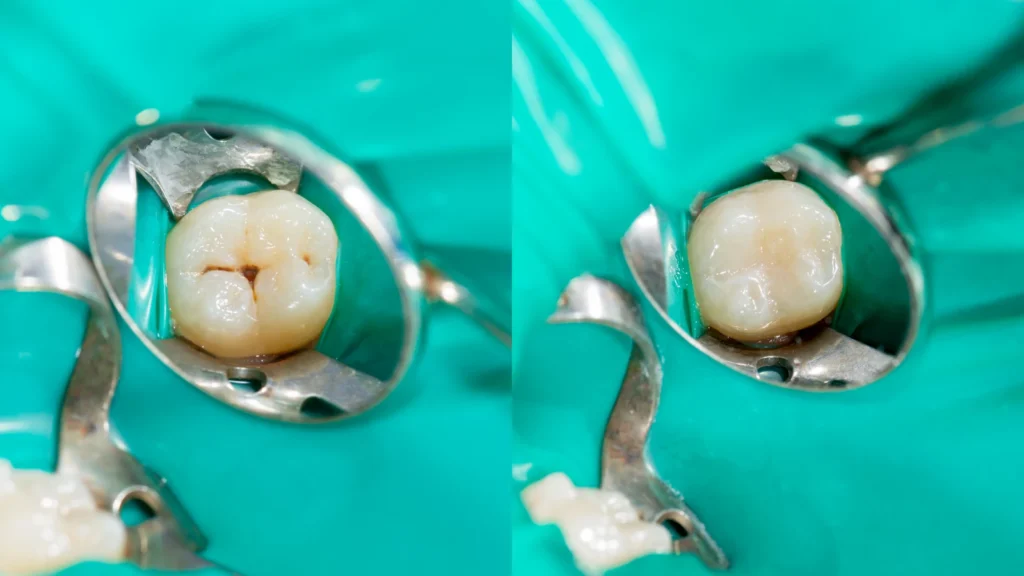
Many patients research composite bonding in Turkey to reshape and close gaps alone, rather than jump to porcelain veneers or crowns.
The treatment uses composite resin that is built directly on the tooth and shaped by the dentist.
Of course, one can say, that’s it, but the outcome of the treatment is way more important than placing white material on a tooth.
Whereas many believe that composite bonding is simpler than porcelain veneering or crowning, the dentist needs to evaluate whether bonding is the right thing to do, the amount of resin needed, how the teeth meet on bite, and whether the tooth or gums need some treatment prior to the bonding.
This is especially crucial in patients who travel to composite bonding clinics in Turkey and opt to include multiple teeth in their treatments within packages offered for 8, 10, 16, and 20 teeth.
Rather than looking at how many teeth are offered for bonding, the question to ask is which teeth are in need of treatments and what composite bonding is able to achieve.
The composite bonding Turkey cost should therefore be looked at together with the actual treatment plan, not only the number of teeth in a package.
Table of Contents
What is Composite Bonding?
Composite bonding is the direct addition of composite resin on teeth for cosmetic and restorative purposes.
It is a tooth-coloured resin used in direct composite bonding and shaped directly on the tooth.
The shape of the material allows the following to be adjusted:
- Tooth shape
- Tooth length
- Some small chips
- Worn edges
- Minor spaces between teeth
- A small diastema in suitable cases
- Other similar surface irregularities
- Colour in selected areas, including some discolouration
Although these terms describe the same type of procedures, there may be a difference in the amount of tooth coverage.
A small edge repair is not the same as the majority of the visible surface of several teeth being covered with composite.
As one of several cosmetic dental procedures, bonding still requires individual diagnosis and planning.
Who is an Ideal Candidate for Composite Bonding?
Composite bonding can be considered for an additive resin restoration of an acceptable tooth.
Patients are interested in bonding to correct:
- Small chips
- Worn edges
- Gaps
- Uneven edges
- Minor tooth size discrepancies
- Cosmetic issues
- The repair of a composite restoration
Prior to treatment, the dentist will assess the following:
- Tooth structure
- Existing fillings
- Decay
- The gums, including gum disease
- The bite
- Tooth grinding
- Tooth positions
- The extent of the change desired
- Expectations of the patient
An improvement in appearance of the teeth does not mean bonding is required on all visible teeth.
Likewise, composite resin does not have the ability to solve all structural, functional, or cosmetic problems.
When May Composite Bonding Not Be the Best Choice?
The most important questions that should be asked when considering bonding is not who, but when bonding is contraindicated.
Bonding generally works best in cases that have:
- A limited amount of structural damage
- Limited decay
- Adequate and stable gum tissue
- No issues with the position of the teeth
- Minimal wear
- Minimal forces from tooth grinding
- A requirement for only a simple restoration
The other treatment an individual may be given, other than bonding, is determined by the dental problem.
For some patients the other treatment might be orthodontics, whitening treatment, placement of porcelain veneers, or another restorative treatment.
A dental implant is a different treatment used when a tooth needs replacement.
The treatment plan should explain the advantages and the limitations of bonding.
Composite Bonding or Porcelain Veneers?
The terms composite bonding and composite veneers are vague and used interchangeably.
Composite bonding involves the placement of composite resin to close a gap, or build up a tooth that is slightly chipped.
Composite veneers involve the placement of composite resin to the front surface of multiple teeth.
Porcelain veneers and composite bonding also have a role in cosmetic dental surgery, but they are different treatments.
Composite bonding is a direct restorative placement.
Porcelain veneers are indirect restorations that require previous planning to be completed through preparation of the tooth.
Important differences can include:
- Preparation of the tooth
- Material
- Stain resistance
- Repairability
- Laboratory work
- Longevity
- Cost
- The duration of treatment
Neither should be described as better of the two.
The detailed decision is covered in our composite bonding vs veneers guide.
How Much Does Composite Bonding Turkey Cost?
The cost of a composite bonding treatment in Turkey varies.
A small amount of bonding on one tooth can’t be compared to a full smile treatment on multiple teeth.
Factors such as:
- Number of teeth
- The extent of the composite needed
- The level of complexity of the shaping
- The condition of the teeth
- Bite
- Existing restorations
- Previous dental work
- The resin material used
- The length of time needed
- Other cosmetic dental work
- The services included in the package
may affect the cost.
This is why the results of searching for:
- Composite bonding Turkey cost
- Composite bonding price
- Composite bonding Turkey price
- Cost of composite bonding Turkey
- How much is composite bonding in Turkey
- How much does composite bonding cost in Turkey
may be different.
Each patient will have a custom plan. Some may need a small amount of resin added to an edge. Other patients will need reshaping across most of the visible surface.
Patients comparing quotes should ask what will be changed on each tooth, whether the treatment is edge bonding or broader coverage, whether polishing is included, whether repairs or adjustments are included, and whether additional dental treatment is required first.
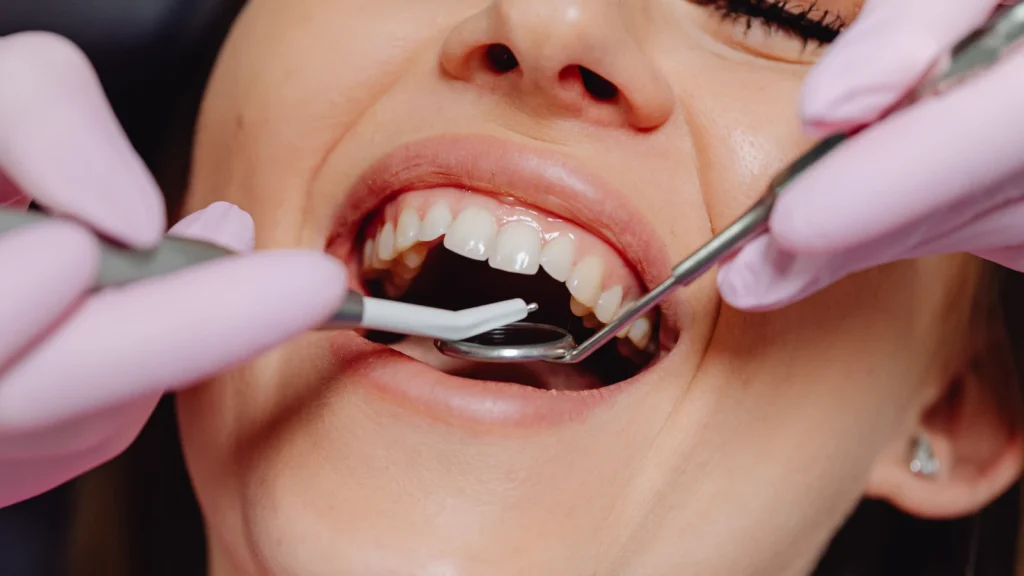
What Are Composite Bonding Packages in Turkey?
As Turkey is a popular destination for dental tourism, packages may combine dental treatment with services for international patients.
The “package” should not be a substitute for a written treatment plan.
Patients should be aware of how many teeth will be treated and what is included in the package before comparing different composite bonding Turkey packages.
What Does Composite Bonding in Turkey Entail?
The procedure will vary depending upon how many teeth and what amount of resin are required.
The dentist examines the teeth to assess what the patient is wanting to change. The condition of the teeth and bite is important before any gum work is performed. Then a smile and shade planning is selected. The dentist selects the affected teeth and decides on planned changes. The composite shade is also selected.
Tooth colour and shade matching are considered at this stage.
The resin used in composite bonding won’t whiten like natural teeth. This means that the shade selection for composite bonding has to be done before teeth whitening.
Tooth Preparation
Composite bonding generally requires less tooth structure removal than other restoration methods that involve replacing tooth structure.
However, “no drilling” should not be treated as a universal rule. The degree of preparation is largely dependent on the tooth and the treatment.
The amount of tooth reduction, if any, depends on the natural tooth and the planned treatment. Preserving healthy tooth enamel is important.
Composite Application
To improve bond and increase adhesion, the composite is applied to the prepared surface of the tooth.
The composite resin material will be built up in layers by the dentist to give the desired form and contour.
This step is largely controlled by the dentist’s skills regarding symmetry, shape, length, surface texture, and vertical and horizontal contact of the opposing teeth.
Curing, Shaping and Polishing
The light-cured composite is shaped and refined by the dentist. A curing light is used during this stage.
The restoration is then polished and the occlusal relations are assessed. Anaesthesia depends on the treatment.
This is important because, though results may look good in photographs, it can create problems in biting and oral actions.
How Long Does Composite Bonding Take?
The length of treatment depends on a number of factors.
These include the number of teeth involved, the quantity of resin being added, the degree of change being made, the extent of bite adjustments and the need for additional dental treatment.
A small restoration and a cosmetic case of 20 teeth cannot be expected to take the same time.
There are several reasons that composite bonding therapy can take fewer treatment stages than ceramic restorations.
One reason is that composite bonding may not require a lab visit.
In some cases, this can allow treatment to be completed in a single visit.
Even though there are too many factors to list, patients should be aware that international travel should allow time for final treatment adjustments and checks.
What Can Composite Bonding Achieve?
Composite bonding can alter the appearance of a number of different characteristics of a smile.
Changes can occur in the length, shape, overall proportions, presence of small gaps, wearing of tooth edges and symmetry of the smile.
There are many other considerations such as the shape of the teeth, the texture of the tooth surface, natural variation, the position of the gums, the smile and lip position, and how the bonded teeth relate to the natural teeth.
The front teeth are particularly important because their proportions and position affect the visible smile.
The aim should be to achieve a result that is consistent with the patient’s individual smile rather than every tooth being the same.
A smile transformation should still work with the individual patient.
What Should Be Considered When Looking at Composite Bonding Turkey Before and After Photos?
Composite bonding Turkey before and after photos help patients to assess the cosmetic dentistry of a particular clinic.
Aesthetics of the teeth cannot be judged from one photo that just shows a white smile. A high quality result cannot be judged from the photograph alone.
Before-and-after photos do not include bite, cannot show the restoration’s performance and maintenance needs over time, or really indicate what restoration requirements are.
Pictures of the procedures performed, while a good representation of the aesthetic result of the treatment, do not truly represent the treatment quality.
How Long Does Composite Bonding Last?
Composite resin has no absolute life expectancy.
Factors affecting the lifespan of composite resin restorations may include bite, teeth grinding, the amount of composite utilized, the position of the teeth, technique employed for bonding, oral hygiene, diet, staining habits, maintenance and oral trauma.
Restorations made of composite resin may require monitoring as well as periodic polishing, repairs, or even substitution in the future.
More information regarding how long composite bonding lasts is included in our detailed guide.
Does Composite Bonding Stain or Break?
Composite can chip or break. When it comes to composite, repairable is not the same as unbreakable.
The way you grind and bite can affect the risk. A night guard may be recommended in selected patients who grind or clench their teeth.
The deeper problems, damage and repairs are covered in our composite bonding problems guide.
How Should Composite Bonding Be Looked After?
Composite bonding has to be looked after like natural teeth.
You should:
- brush regularly with a soft-bristled toothbrush
- use a suitable non-abrasive toothpaste
- floss or clean in between your teeth
- visit your dentist regularly
- do not use your bonded teeth as tools
- follow your dentist’s advice regarding grinding your teeth
- repair chips or rough edges
- have polishing or maintenance done when it is necessary
The other guidance on foods, staining, cleaning and polishing can be found on the composite bonding aftercare page.
How Do You Choose a Clinic for Composite Bonding in Turkey?
When you consider composite bonding, you need to look at the balance between technical and aesthetic dentistry.
Different cosmetic dentists may take different approaches to shape, texture and bite.
Some relevant questions when choosing a dental clinic in Turkey are who will perform the bonding, how many teeth need treatment, what cannot be fixed by bonding, what material is used, how the shade will be selected, whether the bite will be checked, whether similar cases can be shown, and what happens if the bonding needs repair after you go back home.
More about checking a clinic is covered in our guide on how to find a good dentist in Turkey.
Composite Bonding and Dental Vacation
Composite bonding is one of the cosmetic dental treatment options available in Turkey.
It can also be combined with other cosmetic or restorative dental treatments in Turkey, whitening, and other smile makeover treatments.
Convenience of travel should not dictate how many teeth are treated while planning your dental tourism in Turkey.
The treatment plan comes first.
When comparing the composite bonding Turkey cost, the cheapest package is not necessarily the most cost-effective treatment.
International patients should send photos and x-rays, but the final treatment will be based on an in-person evaluation of the patient’s teeth, as well as their gums and bite.
Making A Decision About Composite Bonding Turkey
Bonding a single tooth or multiple teeth is sometimes all that a patient needs. For other patients, full composite bonding or full veneers may be a better option.
An increase in the number of teeth does not necessarily improve the end result.
There are limitations to the use of composite resin. As with most materials, composite resin can stain over time. It can lose its ‘shine’ with heavy use, so will require maintenance. For this reason, when considering anterior composites, long-term monitoring will be necessary.
The final cost should be considered together with what is being done to each tooth, the bite, aesthetics, repairability and ease of long term maintenance.