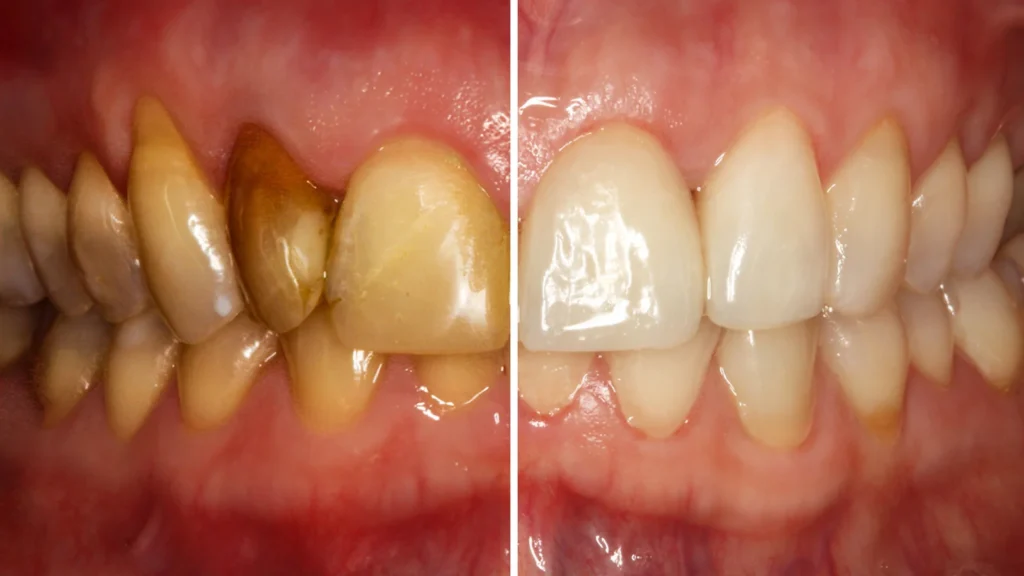
Full Mouth Restoration Turkey – Your mouth isn’t a full set of teeth.
In the same way that your face is unique to you, your oral health needs will vary based on your dental history. One person might come to Turkey with worn teeth. Someone else might be missing teeth alongside old crowns. Someone else might have damaged teeth that need crowns and gaps that require bridges or implants.
The term ‘full mouth restoration’ refers to the process of rebuilding or repairing multiple areas of the mouth, but that doesn’t necessarily mean using one single treatment.
For that reason, patients should avoid ‘full mouth restoration’ packages that offer things like ‘12 implants’ or ‘20 crowns’. These could be useful starting points, but your treatment needs to begin with a proper diagnosis instead.
Patients travelling to Turkey from the UK also need to look beyond how much treatment in Turkey costs. You should understand what teeth can be saved, what needs repairing, what needs replacing and how each part of your treatment plan works together as a whole.
Table of Contents
What Is Full Mouth Restoration?
Full mouth restoration is the process of rebuilding or repairing several areas of the mouth as part of one combined treatment plan.
Other terms like ‘full mouth reconstruction’ or ‘full mouth rehabilitation’ are sometimes used too.
Remember that the exact treatment won’t be the same for two different patients. One patient might need treatment for existing teeth, missing teeth, old dental work and their bite. Another might only need work on their upper teeth.
It can also include several different dental procedures.
One patient may only need dental implants to replace missing teeth, while another only needs dental crowns to repair damaged teeth. A third patient may have several natural teeth that can be saved.
Full mouth restoration is a diagnosis, not a purchasable product like ‘a set of crowns’ or ‘a set of implants’.
You’ll notice some of this confusion in search data around the subject. Many patients also search for ‘what does full mouth reconstruction mean?’ or ‘who needs full mouth reconstruction?’ if they’re unfamiliar with the term.
Full Mouth Restoration vs Full Mouth Reconstruction
These two phrases are often used interchangeably.
Both usually mean that several areas of the mouth need dental treatment at the same time instead of completing one dental procedure on each visit.
‘Reconstruction’ is sometimes used if there is more extensive or complex work to be done. This might include multiple missing teeth or a lot of older dental work that needs replacing.
Technically ‘restoration’ has a broader definition that can include repairing existing teeth.
In reality though, patients shouldn’t worry about which word their clinic uses. Look at the details of what each tooth needs, instead.
A proper treatment plan should show you if each tooth is going to be kept, restored, crowned, replaced or extracted – and why.
Full Mouth Reconstruction vs a Smile Makeover
A smile makeover is sometimes confused with a full mouth reconstruction.
A smile makeover is usually requested for cosmetic dentistry reasons. You aren’t happy with the colour, shape, position or overall appearance of your teeth. You want a more attractive smile.
Conversely, a full mouth reconstruction is usually recommended when there are multiple functional or structural issues with your teeth.
These can include missing teeth, worn teeth, old fillings, broken teeth or crowns, teeth that have been damaged by decay or grinding and so on. Gum disease can also affect the treatment plan. Cosmetic improvement is still possible with a reconstruction, but there should be another underlying reason to do the work.
Repairing and improving the overall health of your teeth is usually enough reason on its own.
One search term we discovered when researching this page was ‘how does full mouth reconstruction differ from a smile makeover?’. If patients are still asking this question, then it shows why we’re spending time clearing up the confusion.
Who Needs a Full Mouth Restoration?
Unlike terms like ‘white smile’ or ‘Turkey Teeth’, there is no archetypal patient that needs this type of treatment.
Patients can benefit when dental issues are affecting multiple teeth. This can be in both the top and lower jaw, just one, or a mix of problems in both.
Having multiple missing teeth in one mouth is one example. Having many old dental restorations that need replacing is another common reason. Many broken teeth, large fillings, teeth suffering from decay or any combination of problems may mean multiple areas of your mouth need work.
Patients missing multiple teeth over time may also have bone loss or changes in the way they chew or bite together. Other patients may have a mix of healthy teeth, teeth that need crowns, teeth that need root canal treatment, and more.
That’s why a proper clinical evaluation is so important. Two patients that both think they need “a full new smile” could receive very different personalised treatments depending on the health of their teeth.
Searches around this topic also show patients with extensive tooth damage and lots of missing teeth may benefit from full mouth reconstruction.
Do I Have to Have All My Teeth Removed?
No. Simply coming abroad for a full mouth reconstruction in Turkey does not mean you will have all of your teeth removed.
This is a vital question because some patients believe the treatment is the same as getting ‘full mouth dental implants’. We’ll talk about that specific treatment option later on.
If your natural teeth can be repaired and preserved, they can still be included in your final restoration. Some teeth might need a crown, some might need root canal treatment, others might only need a dental filling to repair the damage.
If the dentist can’t successfully restore your tooth or predict how it will hold up over the long term, it can be removed and replaced.
When reviewing your treatment plan, each tooth should be discussed individually. Plans that start with the assumption that every tooth needs to be removed are very different to plans that examine each tooth and explain what can be saved.
How Does My Dentist Plan My Treatment?
Your dental restoration will almost always start with an initial examination.
Your dentist needs to check the condition of your teeth, gums and bite. They may take X-rays, a 3D scan or perform other imaging if you’re receiving implants or surgical procedures.
A 3D scan may also help the dental team assess the jawbone, bone structure, bone density or areas of bone loss when implant placement is being considered.
Old crowns, bridges or implants can also cause problems. Previous root canal treatments may fail over time as well.
After your dentist has made their examination, they can decide which teeth can be saved and how each tooth should be treated. They may advise some teeth can stay without treatment, some need a filling, some need a root canal, etc.
Dividing your treatment tooth-by-tooth allows you to see how your dentist plans to treat your mouth.
Instead of being presented with a package name, you should be able to see how many implants, crowns or other procedures you’ll receive. You should also be able to see how these procedures will work together to restore your mouth.
The final restorations should look good when you smile. But your dentist should also make sure the new teeth meet correctly when you bite together. They should also consider how the restorations will work as a complete set when moving or chewing.
Digital dentistry, CAD/CAM and other advanced dental technology may be used during planning or when producing restorations. The technology itself doesn’t decide whether the treatment is right for you.
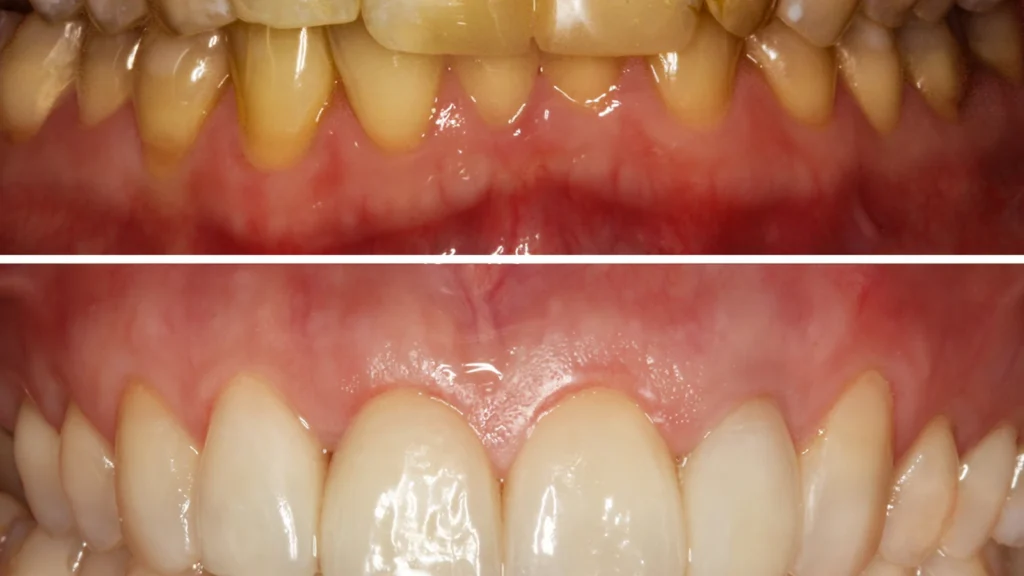
What Dental Procedures Are Included in Full Mouth Restoration?
Crowns
Dental crowns can be used when teeth are heavily restored, damaged by decay or are weakened due to wear. These cap-like restorations cover the whole of your visible tooth.
Depending on the treatment plan, materials may include porcelain, zirconium or zirconia crowns.
Bridges
Missing teeth can sometimes be replaced using a dental bridge. Bridges are false teeth that are held in place by either neighbouring teeth or dental implants.
Crowns and bridges may also be combined when several teeth need to be restored.
Veneers
Dental veneers are sometimes used instead of crowns to improve the appearance of teeth. Like crowns, veneers are custom-made to fit your smile. The main difference is that veneers only cover the front surface of your tooth.
Depending on the case, clinics may discuss porcelain, laminate or E-max veneers. These are cosmetic options and shouldn’t automatically be included in a reconstruction simply because they are available.
Dental Implants
Replacement teeth can be held in place by dental implants. Implants are screw-shaped posts that are placed into your jawbone to hold restorations like crowns, bridges or even dentures.
Patients considering dental implants in Turkey may also need additional procedures before implant placement.
Bone grafts or sinus lifts can sometimes be required if there isn’t enough suitable bone in the area being treated.
Some patients may require additional procedures before the restorations can be placed. This can include root canal treatment, gum treatment, tooth extractions or other procedures that improve your oral health.
Keep in mind that not all of these treatments will be right for you. The specific procedures your dentist recommends should fix your dental concerns.
Restoring vs Replacing Teeth
Many patients want to know how many teeth they can keep. During your initial examination, your dentist will make recommendations but not set a definitive treatment plan until they know how many teeth can be saved.
You may have several missing teeth, but if other areas of your mouth are healthy you might not need as many implants as you think.
Conversely, you might be told that all of your teeth are beyond repair and need to be replaced with implants. It doesn’t hurt to get a second opinion if you think something is wrong with your treatment plan.
As you can see from the types of procedures mentioned above, a mouth restoration can include several different dental treatments. Full mouth restoration and full mouth reconstruction describe the process of rebuilding your teeth. They don’t specify how that is done.
When Are Dental Implants Used for Full Mouth Restorations?
Patients can receive dental implants as part of their rehabilitation. But that doesn’t mean every patient needs implants during their procedure.
You might need a single implant to replace a missing tooth. You might need several implants to support a dental bridge. You may also need what is called a ‘full arch restoration’ if all or most of your teeth are missing.
This is when the topic begins to blend with full mouth dental implants.
The treatments are still slightly different. A full mouth dental implant treatment specifically refers to replacing missing or failing teeth with implant-supported restorations. Full mouth reconstruction covers your entire rehabilitation plan.
Full mouth dental implants are significant enough that they have their own type of search query. Patients researching restoration information in the UK may also search for ‘full mouth dental implants in Turkey’ separately.
Clinics may also use different implant brands. If a specific system is important to your treatment, ask for the implant brand and components to be listed in your quotation rather than relying on a verbal description.
All-on-4 and All-on-6
All-on-4 and All-on-6 refer to implant-supported full arch restoration treatments. If all or most of your teeth are missing on the upper or lower arch they can be used as part of your reconstruction.
These treatments aren’t the same as rebuilding the whole mouth though. We’ve seen other dental guides describe the entire treatment as “All-on-4” or “All-on-6”.
Even the Artificial Intelligence generated reference article we were provided with for this page focuses mostly on All-on-4/All-on-6 treatments. If you search Google for the subject, many informational boxes simply discuss full arch implant treatment.
These are still useful and can treat many patients that come to Turkey for dental work. But they shouldn’t be confused with the overall treatment plan. You may not need All-on-X treatment if you have a lot of natural teeth that can be saved.
Some patients may also be suitable for removable dentures rather than implant-supported fixed teeth. Again, that depends on the patient and their clinical needs.
Cost of Full Mouth Restoration in Turkey
Calculating the cost of this treatment in Turkey can be difficult.
Simply going by what treatment you think you need isn’t enough. Two patients getting the same broad type of reconstruction could require entirely different procedures.
One patient may only need crowns. Another patient may need crowns, bridges and implants.
Some patients need extraction during their appointment. Others may need bone grafts or a sinus lift if they have been missing teeth for a long time.
Material choice can affect price. Waiting times for laboratory work can change the cost. There are many moving parts that make creating an exact price difficult.
Some treatment can be completed in one visit. Other patients may need two or more trips to Turkey to complete their dental treatment.
How do you compare prices between clinics when every patient’s situation is different?
Instead of looking at the overall price, look at what the quotation includes.
Two clinics can provide you with very different treatment, but charge almost the exact same price because of implant brands, laboratory materials or how they structure their packages.
Compare Two Quotes for Full Mouth Restoration
Lets say Clinic A offers you a price that is significantly less than Clinic B. This doesn’t automatically mean Clinic A is the better deal.
Clinic B isn’t necessarily better just because their price is higher either. Clinic A could be missing something in their quote that Clinic B includes. Conversely, Clinic B may offer you treatment you don’t actually need.
One clinic may offer you teeth whitening because their package includes it. Another clinic may charge extra for teeth whitening.
Both clinics may price their implants differently depending on the brand they use. One dentist may want to extract every tooth and start fresh.
Should you get every tooth extracted?
Your other natural teeth could change your treatment plan completely. Crowns, bridges and implants are just some of the options that can affect your overall price.
High-quality dental treatment isn’t determined by the highest or lowest quote alone. You need to know what work is actually included.
Itemized Quotation
When we say look at what your quotation includes, we don’t just mean the price. A useful quotation will break down your treatment plan.
Ideally, you would be provided with a quotation that shows what treatment each tooth or area requires. It will also show what materials will be used on each tooth.
Having an itemized list of your treatment will also show you what might cost extra. For complex cases you may be quoted for:
- X-Rays
- An exam
- 3D scanning when required
- Crowns
- Bridges
- Veneers
- Implants
- Abutments
- Implant placement
- Swiftbars or other temporary teeth
- Tooth extractions
- Root canal treatment
- Gum treatment
- Bone grafts
- Sinus lifts
- Laboratory work
- Follow up appointments
Keep in mind this isn’t an exhaustive list. Your treatment plan may not require everything on this list. You may also require additional treatments that aren’t listed. Things like sedation, anaesthesia or teeth whitening.
Ask about travel deals too. Hotel deals, flights and transfers should be listed separately because they aren’t part of the dental treatment itself.
This is also where dental tourism packages can become confusing. An all-inclusive travel package does not mean all possible dental procedures are included.
Our referenced AI article also states that package pricing is useful when compared. Itemized quotes allow you to see how two clinics may price different treatments.
Why Is Full Mouth Restoration Cheaper in Turkey?
The main reason patients consider Turkey is because treatment can be offered at a lower price. But that doesn’t mean every clinic is offering you the same thing.
Two clinics might be offering the same number of implants, crowns and bridges. But their labour costs, laboratory costs and operating expenses can impact their price.
Exact materials make a difference too. Cheaper doesn’t always mean better, but you shouldn’t rule out a clinic because they are cheaper.
Dental tourism has also made it easier for international patients to compare dental clinics and treatment in Turkey before travelling.
Patients ask ‘why is full mouth reconstruction cheaper in Turkey?’ and ‘why do people go to Turkey for full mouth reconstruction?’ far more often than you would think.
How Long Does Treatment Take?
The time it takes to complete your reconstruction will vary depending on your treatment plan.
Simple cases that require crowns, bridges or veneers can usually be completed in a single trip. These typically don’t require surgical procedures so you aren’t waiting for implants to integrate with your jaw.
Dental implants need healing periods. Unless you’re getting immediate-load implants, you may need to wait a few months for osseointegration, when the implant becomes integrated with the surrounding jawbone.
These patients usually require two or more trips to Turkey.
“How long will my full mouth restoration take?” is also covered within the keyword data. Patients are specifically asking how long treatment will take before they book with a clinic.
Again, the easiest way to know for sure is to ask. Your clinic should be able to provide you with an estimated treatment timeline that matches your dental plan.
“How long should I stay in Turkey for full mouth restoration?” is another search phrase that shows up when researching this page.
Instead of guessing, ask how many appointments will be needed and what work needs to be completed before you can return home.
Will I Get Temporary Teeth With My New Restorations?
Many patients receive temporary teeth during their treatment. But your treatment shouldn’t be copied and pasted from someone else’s experience.
Just because you might need teeth extracted does not mean you will get temporary teeth. The same applies for implants too. There are removable temporary teeth for implant patients. They’re not obligatory for your treatment plan.
Your treatment plan should outline if you will receive temporaries and what you will have between appointments if more than one trip is needed.
Asking questions about your treatment before you start will save you in the long run. Don’t assume you will have the same treatment because someone else did.
Is It Painful?
Some dental procedures are more uncomfortable than others. Getting your teeth prepared for crowns will feel different when you’re having teeth extracted or receiving dental implants.
Many dental procedures can use local anaesthetic to reduce discomfort. You may experience post-operative sensitivity when you leave the clinic. This can include soreness, swelling or other forms of discomfort.
Surgical work can take longer to heal from than non-surgical treatments. Again, your treatment plan should outline what you can expect during and after your appointment(s).
Asking ‘is full mouth reconstruction painful?’ is not very helpful. You would be better asking which parts of your treatment require surgery, and what recovery you should expect.
How Long Will My New Teeth Last?
Every tooth in your reconstruction won’t last the same amount of time. Just like how you could have a mix of implants, crowns and bridges, they don’t always have the same maintenance requirements or longevity.
Long-term results depend on the procedure, your oral hygiene, gum health, bite and how well the restorations are maintained.
Dental implants can remain functional for many years when properly maintained, but the implant and the restoration attached to it are not the same component. Crowns and bridges also have their own expected maintenance and replacement needs.
Maintaining good gum health, cleaning your teeth and regular checkups can help your new teeth last.
Things like teeth grinding, biting forces, gum disease and poor oral hygiene can reduce the lifespan of your restorations.
Some parts of your restoration may fail before others, even if the overall rehabilitation is functioning well. If you grind your teeth, you might need to replace your night guard sooner.
Maintaining your restored teeth is just as important as restoring them in the first place.
Is It Worth It?
Cost and time are always factors you should consider. This can be a big treatment plan. You want to make sure that what you’re getting is worth your time and money.
The treatment can offer improved dental function. Patients missing teeth can have them restored with implants, bridges or dentures. Patients with broken teeth can have crowns used to protect teeth where that is clinically appropriate.
It isn’t a good reason to have healthy teeth extracted. Each part of your treatment should have a reason behind it.
Patients specifically ask if full mouth reconstruction is worth it on Google. Because of this, we won’t simply say ‘Yes’ or ‘No’. Your situation might call for a different answer.
Potential Risks with Full Mouth Restoration
There are more stages to your treatment compared to getting a single filling. With more dental work comes more opportunities for problems to occur.
You may experience sensitivity with your natural teeth. Crowns can sometimes crack, break or need replacing. Gum disease can affect natural teeth as well as the tissues around dental implants.
Dental implants come with surgical risks that you don’t have if you just receive a crown. Bone grafting, sinus lifts and implant placement may also add their own healing periods when they are part of the plan.
Having multiple dental procedures on the same day can also make bite management and recovery more complicated.
Patients receiving extensive dental treatment should also be careful of overtreatment. Just because your dentist can replace every single one of your teeth, doesn’t mean they should.
Your dentist should be able to explain why you need each procedure. If you don’t understand something, feel free to ask.
Taking Care of Your Teeth After Treatment
You may think finishing your treatment means your dental work is done. Continuing to care for your teeth is important after your procedure as well.
Brush your natural teeth, clean around your implants and keep an eye on your gums. Have crowns, bridges and implant restorations checked regularly by your dentist.
Patients who grind their teeth may be recommended to wear a night guard.
Long-term care is especially important when several different restorations have been combined in the same mouth.
Keep copies of your X-Rays, digital scans, treatment plan, implant records and lab work just in case. If something goes wrong with your restoration in the future, your dentist will need to know what you’ve had done.
Having your work done abroad can make this process more difficult. Ask your dentist if they can provide you with any records before you leave Turkey.
Choosing the Right Clinic for Full Mouth Restoration
Remember that several dental professionals can be involved in your treatment.
Your diagnosis may be done by one dentist and checked by another. Your implants may be placed by one clinician, while another dentist manages the restorative part of the case.
The same applies for crowns, bridges or veneers. Some clinics also work with separate dental laboratories using digital dentistry or CAD/CAM systems.
Ask who will be checking your bite before you fly home.
If implants are involved, you can also ask who performs the implant placement, which implant brands are being considered and why they were selected for your case.
Having a team of dental professionals does not automatically make a clinic better than their competitor down the street.
Just like how you want your dentist to understand every part of your treatment, the clinic you choose should be able to explain your entire treatment plan too.
Sources
NHS — Dental treatments. General NHS information covering dental implants, bridges, dentures and other restorative treatment options. (nhs.uk)
NHS dental treatments
General Dental Council — Going abroad for dental treatment. Advises patients considering overseas dentistry to research the provider, understand risks and receive an assessment from a qualified dentist before agreeing to a treatment plan and cost. (General Dental Council)
GDC guidance for overseas dental treatment
GOV.UK — Turkey health and medical tourism advice. Provides current UK government guidance for people considering medical or dental treatment in Turkey. (GOV.UK)
GOV.UK Turkey health advice