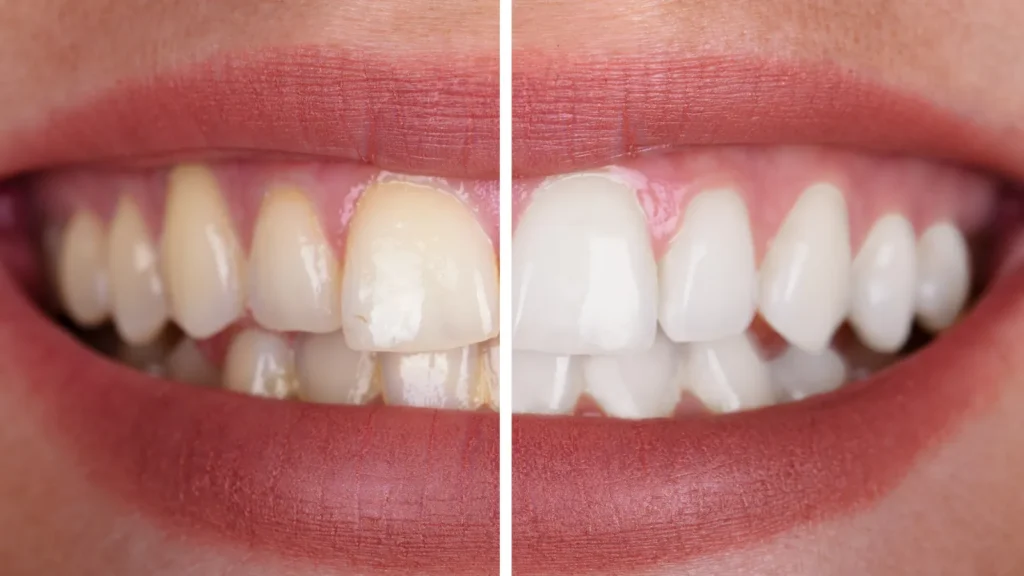
Turkey teeth before and after pictures from the popular Turkey teeth trend can look amazing.
You see a patient before treatment with stained, uneven, worn or missing teeth and after treatment enjoying a brighter, straighter smile.
But there’s more to a result than can be captured in one photo.
Turkey teeth before and after photos can’t tell you how the teeth feel when biting together. They don’t show if the gums are healthy, what treatment was used behind the scenes or how the result will look in several years time.
That’s why looking through a gallery of Turkey teeth before and after photos should be about more than wondering:
“Do I like the before and after photos?”
A much better question is:
“What dental work was used to create this result, and is it a fair comparison?”
What Changes in a Turkey Teeth Before and After Result?
The alterations you see will depend on what dental treatment in Turkey was used.
Common visual differences in before and after photos include:
- tooth colour
- tooth shape
- tooth length
- visible alignment
- symmetry
- spacing
- width of the smile
- chipped or worn tooth edges
- missing teeth
- gum-to-tooth proportion
Some Turkey cases are cosmetic dentistry updates to achieve a Hollywood smile, while others involve smile makeovers, fixed dental bridges, or full-mouth rehabilitation across dozens of teeth.
That’s why two Turkey transformations that look similar on the surface may have actually used completely different dental treatments.
Are Turkey Teeth Before and After Photos Always Veneers?
No.
This is one of the key misconceptions when browsing treatments galleries.
Turkey teeth aren’t the name of a single dental technique.
The after photo could include:
- porcelain veneers
- Emax veneers
- zirconium crowns or zirconia crowns
- other dental crowns
- composite veneers or composite bonding
- dental implants
- full-mouth rehabilitation
- a combination of several treatments
Clinics in Antalya can show twenty Turkey cases under one “Turkey Teeth Before and After” gallery even though the patients underwent completely different dental procedures, such as laminate veneers or extensive crowns.
This is why reading the treatment description matters almost as much as the photos themselves.
If you love the look of a particular Turkey result, ask the clinic exactly what was done.
Turkey Teeth Veneers Before and After
Veneers alter the visible surface of the teeth.
Turkey before photos often include:
- staining
- gaps between teeth
- chipped edges
- uneven tooth shape
- small visible imperfections
The teeth can look more uniform in shade, proportion and shape after veneers.
As you’d expect, not all veneer cases are the same.
One patient may need very minimal tooth preparation. Another may need more removal of tooth structure due to the position of the teeth or existing restorations.
You cannot tell how much tooth structure was removed from an Turkey teeth veneers before and after photo alone.
The dental work involved matters.
Turkey Teeth Crowns Before and After
Crowns cover much more of the natural tooth.
Before and after images that include crowns can show dramatic differences in teeth shape, colour and visible bite alignment.
Patients who have had multiple teeth restored at the same time often enjoy a very different smile after surgery.
However, the after photo doesn’t tell you why the dentist selected dental crowns.
Crowns are an excellent choice for a broken tooth or one that’s been heavily restored before. An intact tooth with only minor cosmetic issues would not need the same amount of tooth preparation.
That’s why your questions should include:
“Which final result would you prefer?”
…and
“Why did this patient need this type of dental restoration?”
What Makes Turkey Teeth Look Natural?
There’s no definition of a “natural” smile.
Every person has unique tooth shapes, face shapes and lip lines. Some people just prefer an extremely white shade.
But when you’re looking at an after photo there are things you should look for:
Tooth Shape
Very few natural teeth are perfect rectangles.
The front teeth and incisors have varying widths and heights when compared side-by-side. Don’t assume a natural-looking smile needs to have identical teeth.
Shade
Everyone wants a bright smile. But that doesn’t mean ultra-white teeth are always the best look.
If every single Turkey case has the same teeth whitening in Turkey result then ask if you can really have an option to customize the shade of your teeth.
Translucency
Natural teeth change how they interact with light depending on where you look.
Fake teeth that are too opaque can look flat in comparison.
Smile and Face
A close-up of the teeth, alongside patient reviews, is very useful for understanding a clinic’s smile design and artistic abilities. But your teeth also sit in your face.
A tooth colour or shape that looks unnatural on its own might be more appealing with the patient’s face and lips.
Gumline
You also can’t judge teeth in isolation from the gums.
The gumline can make even the most lifelike restoration look fake if they don’t shape and texture of the gums match the work done on the teeth.
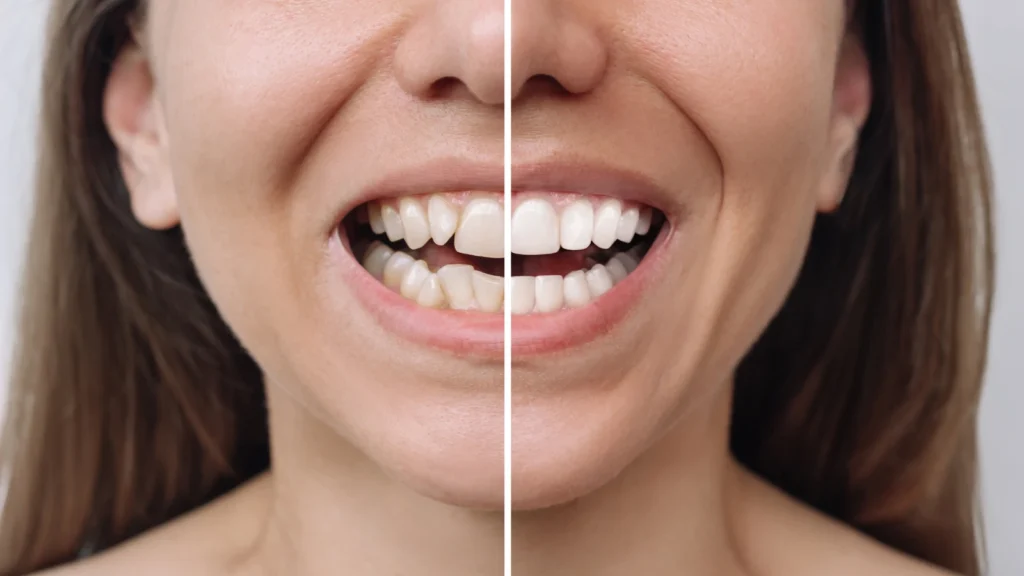
Why Lighting Can Completely Change a Before and After Photo
Lighting can transform any dental photograph.
An after photo taken using brighter white lights may instantly make the teeth look whiter, smoother and more symmetrical.
Camera exposure and white balance can also impact how we view tooth colour.
Note that this doesn’t necessarily mean your clinic is manipulating the images.
But it does mean you should take extra care when comparing one photo that was taken under natural sunlight with another taken using flash indoors.
To make a meaningful comparison, look for before and after photos that use the same:
- camera distance
- lighting
- angle
- patient’s head position
- position of their smile
- any other variables you can think of
Photos with identical variables allow you to compare two results instead of two photographs.
Why Camera Angle Matters
Changing the camera angle can dramatically change how long, wide or straight someone’s teeth look.
Positioning the patient’s chin down slightly can make their upper teeth look wider.
Smiling more in the after photo can give the illusion of dramatic results without taking anything into account related to the dentistry.
That’s why we recommend looking at more than one photo when you’re reviewing Turkey teeth before and after cases.
What Photos Should a Good Before and After Gallery Include?
You should look for a gallery that includes more than just one view.
Genuine photos that clinics should consider include:
- frontal smile
- relaxed smile
- full face photograph
- right-hand side smile
- left-hand side smile
- close up of teeth
- upper teeth where relevant
- lower teeth where relevant
- gumline close up
Whilst not every simple cosmetic enhancement will need twenty photos…
…If a clinic is advertising multiple tooth or full-mouth restorations then the more information you have about their work, the better.
A single front-facing photo of a full mouth of gleaming teeth doesn’t give you enough information to work out if you would trust the dentist with your own teeth.
Does a Good Before and After Photo Prove the Dentistry Is Good?
No. Again.
Clinical photos are powerful. They show you exactly what you need to see: the final result.
But they don’t give you any idea of:
- whether the bite feels comfortable
- if there’s inflammation under the gums
- how easy the restoration will be to clean
- what the tooth nerve looks like
- if decay is hidden under any restorations
- the condition of the bone beneath dental implants
- how well the gum tissue is settling
- the quality of the margins surrounding every restoration
- how the restoration will function in 10 years time
Looks are one part of a successful dental procedure. But you should never trust dental work based on photos alone.
Immediate Results vs Healed Results
Timing is everything with dental photography.
The majority of Turkey teeth case studies you see are taken right after the final restorations have been inserted.
You know immediately how the teeth will look when they leave. What you don’t know is how the gums will look after they heal, or if the bone has integrated (in the case of dental implants) several months down the line.
Whenever you’re looking at Turkey teeth photos, try to find the answer to:
When was this after photo taken?
- Immediately?
- A few weeks later?
- Several months down the line?
- As a long term follow up?
Each of these answers are very different.
And if you can’t find that information then the clinic doesn’t know either.
What Should Be Written Next to a Before and After Case?
Look for a case study that explains what dental work you’re actually looking at.
Ideally, each case should include the following:
- treatment performed
- how many teeth were treated
- were they upper teeth, lower teeth or both?
- what material was used?
- do the treatment notes mention dental implants, such as All-on-4 systems or zygomatic implants?
- when was the after photo taken?
This extra information moves a gallery from looking attractive to being genuinely educational.
Can You Tell If Turkey Teeth Were Ground Down Too Much From Final Photos?
No.
Remember how we mentioned that you can’t always tell what dental work was used based on photos?
This follows the same rule.
The final restorations cover up the prepared teeth. Unless you see a prep shot you won’t know exactly how much natural tooth structure was removed.
Judging by the smile alone two patients can have near identical restorations sitting on very different prep sizes.
Want to know if your tooth will need to be shaved down for Turkey teeth? See your dentist in-person to discuss the treatment plan. Don’t guess based on gallery photos.
What About “Turkey Teeth Gone Wrong” Before and After Photos?
Turkey teeth gone wrong photos are misleading for the exact opposite reason.
Yes, sometimes dentistry does fail and good dentists will own up to their mistakes. But a picture of:
- a broken crown
- red gums
- visibly damaged restoration
Tells you that something isn’t right. Not why it happened, how it happened, when it happened or if the original dentist will fix it for free under their guarantee.
Remember: dental photographs can only show you what something looks like. They are not a diagnosis.
What Do Turkey Teeth Look Like Years Later?
This goes back to our immediate results vs healed results section.
As time passes both dental work and your mouth will change.
Your gums may shift. Your bite may change as you age. Even natural teeth can stain at different rates to dental restorations.
That’s why there is no universal Turkey result that every patient will progress to after 5 or 10 years.
Long-term Turkey teeth results will vary depending on:
- oral hygiene
- treatment provided
- restorative material used
- your bite
- gum health
- how well you keep your teeth clean
This is another reason long-term follow up photos can be more useful than scrolling through gallery after gallery of fresh cases.
How Do You Compare Before and After Galleries From Different Clinics?
Don’t count which clinic has the largest before and after library.
Instead, look at the information each clinic provides.
Before and after photos become much more useful when you can see:
- patients with different teeth to start with
- a variety of tooth shapes rather than cloned teeth
- standardized photography methods
- close up photos
- details about the dental work provided
- information about the restorative material used
- realistic results that vary from patient to patient
- long term dental follow up where possible
Find the same shade of white teeth andperfect shape on every single patient? Be careful you’re not choosing a cloned set of teeth you’ll regret later.
Red Flags in Turkey Teeth Before and After Photos
Ask questions if a Turkey teeth photo gallery:
- uses different lighting in the before and after photos
- has inconsistencies in camera angles
- only shows you the final smiling result
- doesn’t mention what dental treatment was used
- features patients who all seem to have the exact same teeth
- doesn’t specify if patients were treated with veneers, crowns or implants
- seems to have used heavy photo filtering
- doesn’t include any close-up clinical shots
- only features day 1 results
- won’t respond when you ask if they actually treated the patients photographed
Again, these things don’t mean the dentist is hiding something. But they will limit how much you can interpret from the photos.
Should You Choose a Dentist Based on Before and After Photos?
YES. But that’s not the only thing you should research.
Turkey teeth before and after photos allow you to pick a dentist whose aesthetic you like. You can decide:
- whether you like very bright teeth or more natural shades
- do you like rounded tooth edges or boxes?
- would you rather change your smile completely, or make subtle improvements?
- are you more comfortable with completely symmetrical teeth? Or slightly uneven?
…but you should not choose a dentist based solely on photos.
A before and after photo cannot tell you if you’ll be comfortable with your dentist. Or whether your teeth are in a similar position to the patient in the photo.
If you start treatment hoping to recreate someone else’s teeth you may leave disappointed by your own result.
Questions to Ask About Turkey Teeth Before and After Cases
Here’s our recommended list of questions. Please the clinic if you find a Turkey result that you like:
- Exactly what dental work did this patient receive?
- Turkey dental veneers? Turkey dental crowns? Or implants like All-on-6 restorations?
- How many teeth were treated? Upper? Lower? Both?
- What restorative material was used?
- When was this after photo taken?
- Can I see the dental work from other angles?
- Do you have Turkey case studies where my teeth are similar to start with?
- Is it true that these patients were actually treated at your clinic?
- Can you show me long term Turkey teeth before and after photos?
- Based on my teeth, what treatment would you recommend and why?
You’ll notice we don’t suggest asking to “make my teeth look exactly like this photo.”
Turkey Teeth Turkey: The Bottom Line
Turkey teeth before and after photos are great.
They show you how a dentist can transform tooth color, shape, symmetry and overall appearance of a smile.
But they shouldn’t be treated as undeniable proof of what you can expect behind closed doors.
Look at the photos. Then research further.
What dental procedure was used?
Was the after photo taken under the same lighting as the before?
When was the after photo taken?
…and most importantly…
Make sure you’re choosing a dental work and treatment plan that’s customized for your teeth. Don’t just assume you’ll end up with the exact same shade and shape as the last patient at the clinic.