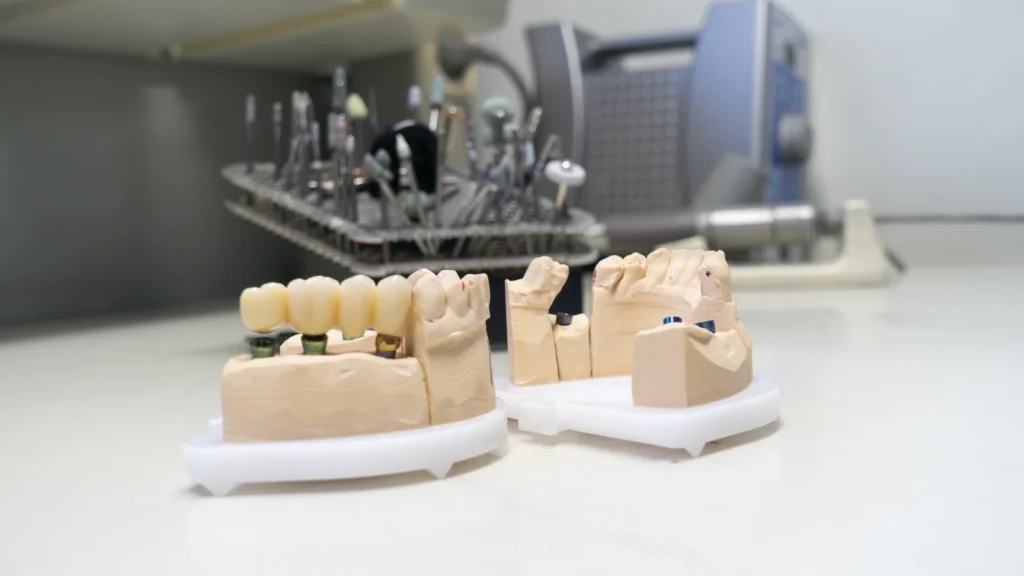
Deciding between zirconia vs porcelain crowns seems easy until you realise that “stronger” doesn’t automatically mean “better”.
A crown on the backside may face massive chewing and biting forces. Crowns nearer the front may need to match the teeth beside them perfectly. Both strength and appearance matter, but one crown material can suit one better without being ideal for every patient.
Another issue: “Porcelain crown” isn’t a specific thing.
Patients often use it as shorthand for all tooth-coloured ceramic crowns. Dentists talking about traditional porcelain dental restoration options vs modern glass ceramics may also use the label porcelain crown.
To complicate matters further, zirconia crowns come in both monolithic (no veneer) or layered with porcelain.
In fact, the useful question isn’t:
Is zirconia better than porcelain?
It’s:
Which material offers this tooth the best balance of strength, appearance, and preservation of natural tooth structure?
Zirconia vs Porcelain Crowns: At-A-Glance
| Feature | Zirconia Crowns | Porcelain / Ceramic Crowns |
|---|---|---|
| Strength | Generally very high, particularly monolithic zirconia | Depends heavily on the ceramic used |
| Translucency | Varies; some zirconia is more opaque | Often excellent with highly aesthetic glass ceramics |
| Front teeth | Can be suitable, especially more translucent or layered types | Often considered where natural light transmission is important |
| Back teeth | Frequently used where heavier chewing forces are expected | Some ceramics are suitable, but material selection matters |
| Chipping | Monolithic zirconia has no separate porcelain layer; layered zirconia can chip | Chipping or fracture risk varies by ceramic and design |
| Opposing tooth wear | Surface finish and polishing are important | Also affected by surface roughness and material |
| Tooth preparation | Can sometimes work at relatively conservative thicknesses | Preparation depends on the exact ceramic and crown design |
| Adjustment | Very hard material and needs careful finishing after adjustment | Depends on ceramic type |
| Repair | Significant zirconia damage can be difficult to repair | Repairability also varies between ceramic systems |
| Appearance | Modern zirconia can look very natural | High-translucency ceramics can offer excellent aesthetic depth |
| Best choice | Depends on tooth, bite and restoration design | Depends on tooth, bite and aesthetic requirements |
That table isn’t meant to give the final answer. It skips over details that can affect each situation. Instead, it shows the quick answer if you need it.
The details in the sections below are where the decision about these crowns becomes useful.
What Is a Zirconia Crown?
Made from zirconium dioxide, zirconia is a highly biocompatible dental ceramic known for its exceptional strength.
As a result, it’s possible to create metal-free crowns using zirconia. These may outlast porcelain fused to metal crowns, whether placed over natural teeth or dental implants, where significant chewing forces are expected.
But there are different types of zirconia crowns.
Monolithic zirconia crowns
Zirconia makes up the majority of the crown. There is no additional porcelain veneer applied to the outer surface.
Layered zirconia crowns
The zirconia acts as a sort of metal substructure. It is bonded to another ceramic which improves aesthetics.
Because zirconia comes in varying levels of translucency, it’s possible for two clinics both offering “zirconia crowns” to provide patients with significantly different results.
What Is a Porcelain Crown?
If you’ve ever asked about porcelain crowns, you’ll know exactly what I mean by “pick your fight”.
The issue isn’t simply that porcelain itself is ambiguous. Some patients use the word “porcelain” to refer to almost any tooth-coloured crown.
Within reason. I’m not going to accept your filling being called a porcelain crown.
Ceramic crowns can be made from traditional feldspathic porcelain or stronger alternatives like Emax lithium disilicate glass ceramics.
Porcelain can also be layered on top of another material. So a porcelain fused to metal (PFM) crown isn’t the same thing as an all-ceramic crown, even though both have porcelain in them.
In short, when reading up on zirconia vs porcelain crowns, ask your dentist what they mean by porcelain. The marketing brochure doesn’t matter. The material being used does.
Which Is Stronger: Zirconia or Porcelain?
Looking strictly at material sciences and flexural strength, zirconia usually wins out. This is partially why dentists often propose zirconia crowns for molars.
Teeth at the back of your mouth must endure vertical and side-to-side forces each time you chew. Patients who grind their teeth exert even more pressure on chewing surfaces.
But just because something is strong doesn’t mean it can’t fail.
Crowns fail due to chipping or cracking, among other reasons:
- Fracture
- Chipping
- Poor crown fit
- Tooth decay hidden underneath
- Issues in the supporting tooth
- Cement failure
- Bite (occlusion) problems
- Damage during adjustment
- Gum disease or recession exposing the margins
- Something not covered here!
Zirconia may be stronger than porcelain, but porcelain crowns don’t just suddenly fall apart.
A strong crown on a badly prepared tooth is still a failure.
Similarly, a strong crown that’s poorly adjusted can create bite problems of its own.
So while strength is vital, zirconia crowns aren’t automatically bulletproof.
Which Looks More Natural?
Thanks to high levels of translucency, porcelain crowns and other translucent ceramics have a head start here.
Natural tooth enamel isn’t opaque like many plastics. Dentine under the enamel provides colour. And how much light reflects off the surface depends on thickness, texture, and where your tooth sits in your mouth.
So natural teeth have depth.
Many translucent ceramic crowns can replicate this natural appearance.
Unfortunately, some zirconia restorations are quite opaque.
That has its uses. Opaquer materials can help mask darker teeth underneath. But when speaking strictly of aesthetics, matching a front tooth to the teeth beside it calls for a natural-looking translucency.
Thankfully, new zirconia formulations are far more translucent than early dental zirconia crowns.
It’s also possible to improve appearance by layering porcelain over zirconia. This can help with:
- Translucency
- Surface texture
- Gradual colour shifts
- The illusion of depth
- Replicating unique tooth characteristics
Instead of saying “porcelain looks natural, zirconia looks fake”, try replacing “looks” with “can look”.
Which Material Is Better for Front Teeth?
Front teeth are different from molars.
Appearance is just as important as function in cosmetic dentistry. Color of surrounding teeth, translucency, shape, the surrounding gum tissue and gum line, prepared tooth color, space and occlusion all become part of the equation.
Instead of automatically choosing the strongest material, your dentist may select a highly aesthetic ceramic, such as Emax lithium disilicate, if they need to match a single front tooth to its neighbors.
Translucent zirconia or layered zirconia might also be suitable, depending on the case.
Thinking zirconia is automatically strong enough for back teeth doesn’t work in your favor if you need a front tooth restored.
Asking “why are you recommending this material?” should be part of any crown consultation.
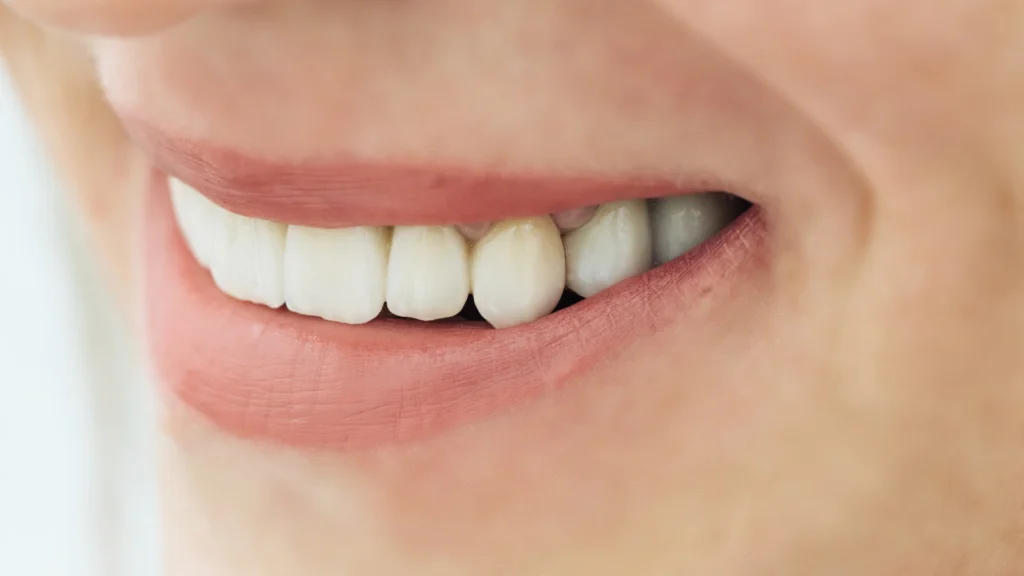
Zirconia vs Porcelain Crowns for Back Teeth
Since posterior teeth do much more chewing, function tends to outweigh aesthetics.
But that doesn’t mean porcelain is right for every back tooth. Doctors also need to look at:
- Prepared tooth thickness
- Remaining tooth structure
- Position of the tooth
- Teeth they bite up against
- Overall bite contacts
- Grinding/clenching
- Patient’s bite
Does your dentist automatically recommend zirconia for molars or premolars? They should at least consider it. But remember: material choice isn’t the only decision that matters.
Which Is Better If You Grind Your Teeth?
Patients who clench or grind (known as bruxism) change the strength comparison once again.
Especially at night, teeth slide across each other much more rapidly. This can increase the risk of damage to both natural teeth and crowns.
For this reason, your dentist may recommend stronger crown materials to resist chewing forces. Because layered zirconia has no weak veneer layer, it’s sometimes suggested.
Does this mean:
If you grind = get zirconia crowns.
No.
Improperly adjusted teeth can cause problems no matter how strong your restoration. Dentists should evaluate your bite as a whole.
Treatment may include:
- Bite adjustments
- Modifications to the crown design
- Ensuring appropriate thickness of the material
- Checking your other teeth
- Possibly a night guard
Dealing with the cause of the grinding (bruxism) is often more important than just slapping on strong materials.
Chipping vs Fracture: What’s The Difference?
Hold onto your smiles, because we’re getting into the technical stuff.
Monolithic zirconia crowns
No porcelain veneer exists on these crowns.
This reduces the chance of porcelain fracturing (chipping) off the crown. However the zirconia can still fracture.
Layered zirconia crowns
…the veneering ceramic can chip away without affecting the zirconia substructure.
This is a problem. But it isn’t the same problem as if the zirconia fractures.
All porcelain / ceramic crowns
Behaves according to the ceramic used and how your dentist prepares your tooth.
Don’t believe online forum posts that make it sound like all porcelain crowns fracture at the same rate.
Natural Teeth Wear Against Zirconia vs Porcelain: What’s The Difference?
Porcelain is so hard it will wear your teeth away!
Not always.
Surface finish matters.
A zirconia crown that’s adjusted to fit properly will have its margins polished to remove abrasiveness. If you bite down on that polished surface, you get one level of interaction with your natural teeth.
If the dentist adjusts the crown and never polishes it, you get a rough surface that interacts with your teeth differently.
Same thing with porcelain and other ceramics.
So please don’t look at this as:
Zirconia is abrasive and wears your teeth away. Porcelain is fine.
Ask about:
- How rough the crown will be
- If the crown needs adjusting
- How they’ll polish the adjusted surface
- Your bite, and if too much force is focused in one spot
How well your dentist finishes the restoration matters as much as what material they try to sell you.
Is More Tooth Preparation Needed?
Every crown procedure needs something trimmed away from your natural teeth.
How much varies on more than whether the crown is porcelain or zirconia. Thin or bulky? Occlusion. How much of your tooth broke off or was decayed out? Aesthetic concerns and what you want to mask…
Even the position of the tooth can impact how much preparation is needed.
Yes, some zirconia crowns can survive at very low thicknesses. Their strength lets the dentist get away with removing less of your natural tooth. So they can propose zirconia as a way to save tooth structure.
But it would be equally inaccurate to claim all porcelain crowns require more tooth reduction.
Porcelain vs zirconia isn’t the right question. Different ceramic materials have different preparation requirements.
Which Option Leaves Less Of My Tooth?
The better question is how much of your tooth will need to be removed for EACH Viable Option for your specific situation.
Adjusting or Repairing Zirconia vs Porcelain Crowns
Zirconia is hard. Really hard.
That’s great for withstanding chewing forces but makes it difficult to adjust later on.
Once the crown is chipped, cracks may need to be repaired or the crown replaced.
Same with porcelain crowns. Depending on where the damage is and what ceramic your dentist used, repairs may or may not be possible.
That’s why neither option should be chosen based on assumptions that it will never need adjustment or repair.
Expect both materials to last many years. But no dentist can promise a crown will never have issues.
Porcelain vs Zirconia Crowns: Lifespan and Longevity
There is no exact science that says:
Zirconia lasts X amount of years. Porcelain lasts Y amount of years.
Both zirconia and porcelain crowns can last a long time. Durability isn’t decided by the material alone. Several decades isn’t unheard of with good natural tooth structure left.
How long your crown lasts — its longevity — depends on far more variables than what’s used to make the crown.
Condition of remaining tooth, crown fit, gum health, oral hygiene and many other factors play a role. How your materials fail can also vary.
Does zirconia offer better fracture resistance? Probably.
But maybe your dentist chooses porcelain because they prefer how it bonds to your tooth.
Patients should use that information for what it is: comparing survival percentages. Don’t let it decide for you.
Zirconia vs Porcelain: Which Is Better?
Here’s a better way to decide if you need dental crowns:.
| Situation | Material Considered | Priority |
|---|---|---|
| Back tooth that must endure heavy chewing forces | Monolithic zirconia | Strength |
| Isolated tooth that needs to match neighbouring teeth | Highly aesthetic ceramic | Translucency and colour match |
| Front tooth requiring both durability and aesthetics | Translucent or layered zirconia / suitable aesthetic ceramic | Balance between appearance and function |
| Patient who grinds excessively | Suitable stronger restoration | Mitigating fracture risks and managing the bite |
| Prepared tooth that is too dark and requires masking | More opaque material | Mask natural tooth colour |
| A full set of crowns needing a mix of functionality | May vary depending on tooth position | Managing function across the entire bite |
Compare the tooth. Not the materials as a blanket statement.
Specific tooth. Anterior vs posterior. Is there enough tooth left? What will it bite against? How visible is it? Do you grind?
Does one material clearly outshine the other, given your mouth?
Which Material If You Get Crowns in Turkey?
Planning to fly abroad for dental treatment?
Don’t choose material blindly.
You aren’t going to see your dentist for years. If something goes wrong, you’re now responsible for getting back to the dentist who treated you.
Does that zirconia crown start chipping?
Welcome to holiday disbonds overseas..
“I chose zirconia because you said they’d last forever!” won’t get you very far.
Make sure you know:
The exact tooth being prepared WHY each individual tooth needs a crown WHAT ceramic your dentist plans to use IF zirconia is being used, whether it’s layered or not WHY they believe that material is suitable for each tooth HOW much natural tooth structure will be removed WHO will be making the restoration (such as using digital dentistry and CAD/CAM technology for a milled restoration) HOW they will ensure your bite is correct AFTER CARE. What to do if you have issues with your restoration once you leave
If you have questions about your treatment, ASK.
Get back to us in the comments. If we haven’t addressed something specific to your concerns, we’ll do our best to answer it.
Final Questions About Zirconia vs Porcelain Crowns
- What EXACT material are you planning to use?
- Why is that material suitable for this tooth in my mouth?
- If you said porcelain, what does that actually mean?
- If you said zirconia, is it layered or not?
- For this tooth, is strength or aesthetic more important?
- What will this crown bite up against?
- Am I clenching or grinding that could complicate my restoration?
- How much of my natural tooth will need to be removed?
- If you need to adjust my crown, how will you polish it?
- How well will this material match my natural teeth?
- What happens if the crown chips or fractures?
- How difficult will it be to repair or replace?
- What records or digital scan data will I get when treatment is complete?
If your dentist can’t explain their choices to you, that should tell you something.
Is Zirconia or Porcelain Better For Crowns?
Don’t look for a winner.
Understanding zirconia vs porcelain lets you understand why your dentist may recommend either in restorative dentistry.
Zirconia provides a very strong ceramic solution where chewing forces are a concern. Porcelain crowns and other aesthetic ceramics offer natural-looking translucency when appearance is the goal.
Material technology has blurred the line between the two. Translucent zirconia doesn’t look like traditional zirconium crowns. Some modern ceramic materials can be much stronger than old-fashioned porcelain.
Choosing between zirconia and porcelain comes down to a single question:.
What do YOU need?
Sources & References
National Institute of Dental and Craniofacial Research (NIDCR) — Bruxism
Clinical information about grinding and clenching, tooth damage and mouth guards.
https://www.nidcr.nih.gov/health-info/bruxism
A Systematic Review and Meta-analysis Evaluating the Survival, Failure, and Complication Rates of Tooth-Supported Single Crowns — PubMed
Research covering zirconia, lithium disilicate, metal-ceramic and other single-crown systems.
https://pubmed.ncbi.nlm.nih.gov/41489982/
Natural Teeth Wear Opposite to Glazed and Polished Ceramic Crowns: A Systematic Review — PMC
Research examining ceramic restorations, polishing and wear of opposing natural enamel.
https://pmc.ncbi.nlm.nih.gov/articles/PMC9807933/