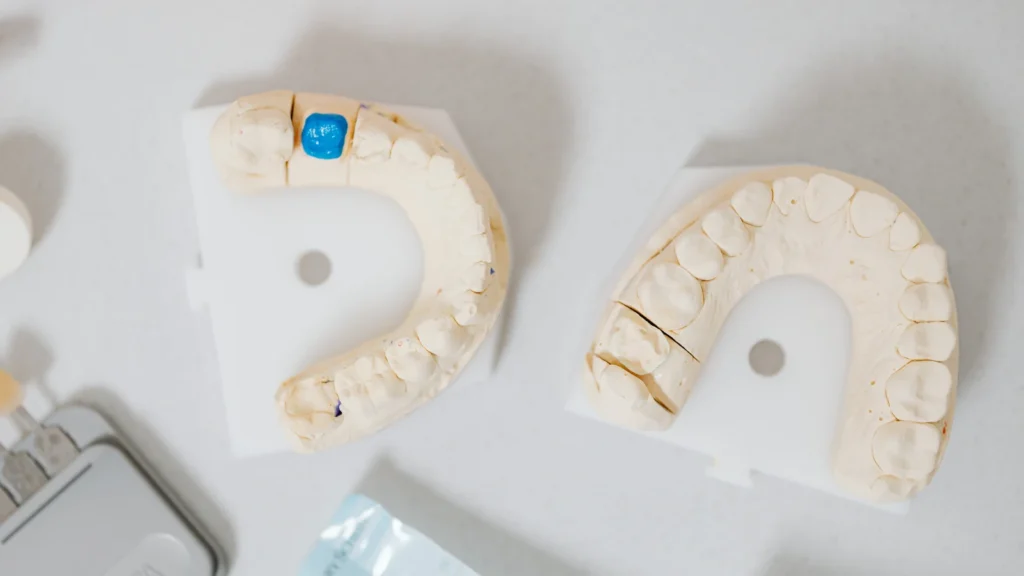
When replacing all teeth in an arch with titanium implants (the titanium posts inserted into the jaw) during a procedure for dental implants in Turkey, a dentist can choose between placing four implants or six implants. These are often referred to as All-on-4 dental implants and All-on-6 dental implants.
Four dental implants and six dental implants can support a fixed full-arch restoration, but the number and placement of implants beneath the bridge differs between the two techniques. The approach can impact how the prosthesis is supported, how forces act on implants and teeth, whether bone grafting is required and how the treatment needs to be planned.
Reviewing these considerations can help patients understand what sets the options apart and how a treatment plan is developed.
For patients comparing all on 4 vs all on 6 dental implants, the key issue is how the implant count works with the jawbone, available bone and overall prosthetic design.
All-on-4 vs All-on-6 at a Glance
AspectAll-on-4All-on-6Implants per arch46Full-arch fixed teethYesYesImplant distributionFour planned points of supportSix planned points of supportPosterior implantsOften angled, depending on the specific caseMay be angled or non angled depending on anatomy/treatment designBone requirementsPlacement can sometimes help optimize available boneEnough bone needed at additional implant positionsBone graftingMay be avoided or required depending on anatomyMay still be required depending on anatomyImmediate temporary teethMay be possible with correct treatment designMay be possible with correct treatment designSurgical complexityRequires less implant sitesMore implant sitesPriceGenerally lower when other factors remain the sameGenerally higher because more implants/components are usedBest optionDepends on the individual caseDepends on the individual case
When deciding between all on 4 and all on 6 dental implants, the details matter. Two patients may have the same degree of tooth loss yet require very different designs due to how their teeth come together, where bone is present or other factors.
Which Implants Are Right For You?
Your jaw anatomy and bite can impact which dental implants you’re eligible for.
Why Does Implant Number Matter?
The big obvious difference between All-on-4 vs All-on-6 is …well… the number of implants! But perhaps a more important question to consider is where those implants go and how they support the bridge.
Imagine you have a full arch of teeth supported by dental implants. If more implants are used, then the prosthetic load can be spread across them. That doesn’t automatically make the treatment stronger or improve its long-term durability. Implant length, width, position, angle, bone quality, bridge material and bite forces all play a role.
This is why deciding between All-on-4 vs All-on-6 implants is more complicated than simply counting how many implants are used.
How Implants Are Positioned Impacts Load Distribution
An important difference between dental implant designs is cantilever.
The cantilever is the section of the bridge that ‘hangs’ beyond the most posterior implants. As that unsupported section gets longer, the force on the restoration needs to be managed with care.
Adding extra implants can give your dentist more options for spreading support further back along the jaw and reducing the cantilever length. However, this might not be possible if there isn’t enough suitable bone present to place them in ideal positions.
Six implants clustered closely together is not automatically better than four implants which are well spread-out and incorporated into the overall prosthesis design.
Your bite force is important too.
Heavy clenchers or grinders can put much greater forces on a bridge than someone with a light bite. Teeth that are biting down on the opposite arch are also important. Teeth work differently when you bite down on natural teeth vs fixed dental implants vs traditional dentures.
All these variables should be evaluated together instead of using implant number alone as a proxy for strength.
Chewing forces, overall chewing function, force distribution, and prosthetic design should therefore be assessed together rather than judging the restoration by implant count alone.
Bone Availability Impacts Implant Placement Choices
Bone availability and specific bone requirements are key reasons why a dentist might recommend All-on-4 over All-on-6 (or vice versa).
All-on-4 designs can sometimes take advantage of stronger areas of bone in your jaw, including placing angled implants in the posterior (back) jaw. This may allow the dental team to avoid other anatomical structures and, in selected cases, avoid the need for bone grafting.
All-on-6 designs require two additional implant sites. There must be enough bone in those positions or the treatment plan needs to be altered.
That doesn’t mean All-on-4 never requires bone grafting and All-on-6 always requires it. There are many cases where a patient has enough bone for six implants and none at all for four. Equally, there are patients that need bone augmentation even when using an All-on-4 design.
The only way to know for sure is to look at the jaw with imaging and plan treatment accordingly. The name of the treatment technique doesn’t tell you everything you need to know.
Bone volume and bone density can both influence where implants can be placed, while the underlying bone structure can affect the wider treatment plan.
Upper Jaw Versus Lower Jaw
Yes, it can.
The upper and lower jaws have differences in anatomy and bone quality. The maxilla or upper jaw can have different bone characteristics. It also deals with the proximity of the maxillary sinuses. The mandible or lower jaw also has it’s own anatomical restrictions to consider, including where the inferior alveolar nerve runs.
Bone density can also vary between jaws and between individual implant sites.
As a result, a dental implant treatment plan that works in the lower jaw might not be suitable for the upper jaw.
It’s also possible to use different implant positions or even different numbers of implants in the upper jaw vs lower jaw for the same patient.
For these reasons, we generally prefer to make this decision on a per arch basis. Rather than saying you need all-on-4 or all-on-6 for your full mouth.
These anatomical differences are why 3D imaging is useful when planning full mouth dental implants in each jaw.
Are More Implants Automatically Better?
No. While six implants can create more potential support points for a full-arch restoration, it doesn’t automatically follow that All-on-6 implants are more successful.
Comparative research published to date, including that we’ve covered below shows that four implant full arches and six implant full arches can both provide successful long-term results when patients are selected carefully and treatment is planned well. It also highlights that it’s hard to compare studies directly because they sometimes focus on different jaws, different groups of patients, different prosthetic frameworks or follow patients for different lengths of time.
Reported success rates should therefore be interpreted in the context of patient selection, follow-up period and treatment design.
The better question to ask isn’t ‘Which treatment uses more implants?’. It’s:
‘Does this patient gain any benefit from using two additional implant positions?’
Are All-on-6 Dental Implants More Stable?
There may be cases where yes, All-on-6 dental implants are more stable. However, we cannot simply say ‘Using six implants is more stable or more successful than four’.
It all depends on the full treatment plan including how those implants are positioned.
If properly planned and positioned using ideal implant angles to maximize the use of available bone, then All-on-4 has the potential to provide a stable foundation for a full-arch fixed denture.
Long term stability depends on the complete implant and prosthetic design rather than implant number alone.
What If You Lose An Implant?
When people ask us which is better between All-on-4 vs All-on-6 implants, one of the common questions they then ask is; what happens if they lose one of the implants?
If you have an All-on-4 bridge and one of the implants fails, that means you’ve suddenly gone from having four supporting implants to only three. The original prosthetic plan will most likely need to be reviewed.
With an All-on-6 bridge you have two additional implants. Having more supporting implants can give the dentist more options if one of the implants doesn’t integrate or develops a problem in the future. But we can’t say that just because you have six implants your treatment will carry on regardless if one of them fails.
Response to implant failure will depend on a number of factors including:
- Which implant has failed?
- When does it fail?
- How are the remaining implants positioned?
- Can the dental bridge be adapted?
- What does the bone and gum look like around the failed implant?
- Did the implant fail during healing or many years later?
The dentist may decide the bridge needs to be unloaded, adjusted, partially removed or even completely remade.
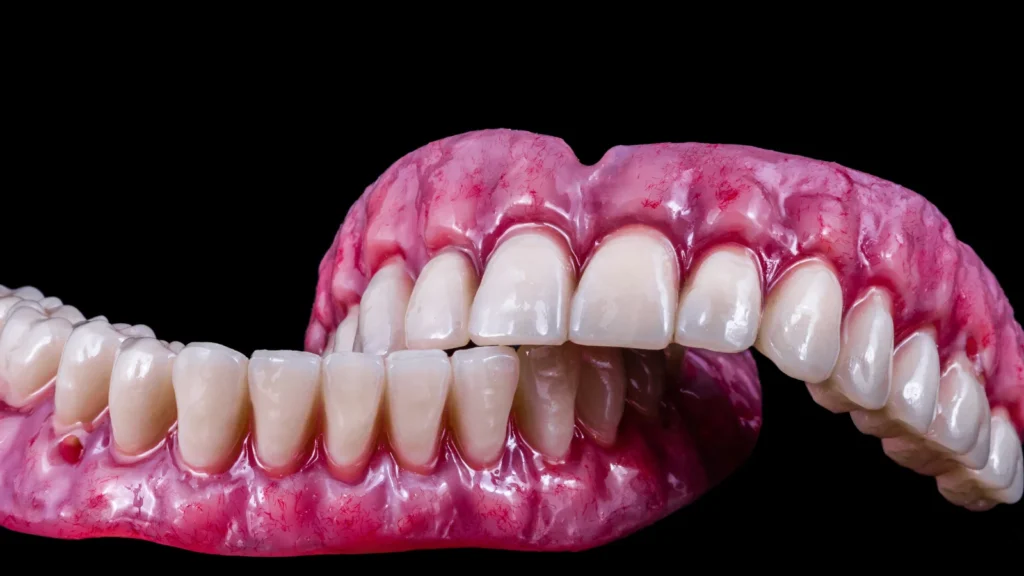
Comparing Biological & Mechanical Complications
Complications with All-on-4 can sometimes be reduced by angling the posterior implants.
As you might expect, both treatment options have biological and mechanical risk factors.
Potential biological issues include:
- failure of implants to integrate with the bone
- infection around implants or the bridge
- inflammation around implants
- bone loss around implants
- soft tissue problems
Mechanical complications can include:
- screw loosening
- wear of the replacement teeth (prosthesis)
- fracture or chipping of the prosthesis
- damage to the bridge framework
- damage caused by excessive forces (from clenching / grinding.)
Notably, some of these complications can potentially be reduced by carefully controlling implant position.
As you can see from the chart above, implant number does not necessarily determine complication risk. Patient selection, prosthesis design, oral hygiene and bite forces are equally if not more important for long-term success.
Same Day Teeth Possible With Both?
In many cases, yes. Immediate loading can sometimes be possible with All-on-4 or All-on-6 dental implants. Immediate loading means the fixed bridge is attached to the implants soon after they’ve been placed.
Same-day implants does NOT mean your treatment will be complete the same day. Just because you walk out with teeth on the same day you have implant surgery doesn’t mean you shouldn’t follow your dentists post-operative care instructions!
Even if you get immediate teeth, the implants still take several months to integrate with your jaw. Immediately loaded implants are usually placed into a temporary bridge and your diet will likely be controlled while you heal.
This biological healing process is known as osseointegration.
Whether immediate loading is an option depends on many factors. These include:
- stability of implants when they’re placed
- bone quality
- implant positions and angulation
- bite force
- design of the fixed temporary bridge
- your dental team’s clinical protocol
You’ll receive permanent teeth after the implants have integrated and been reassessed by your dental team.
Will Six Implants Give You A Worse Recovery?
Not necessarily.
Inserting six dental implants means there are two extra implant sites for the dentist to prepare. The dental surgery may take longer because there are more implants being placed.
The overall surgical procedure can still vary considerably depending on what else is included in the treatment.
…but that doesn’t automatically translate into every patient with All-on-6 having more pain or a longer recovery than All-on-4.
Smokers often take longer to recover from implant surgery regardless of how many implants they receive. Some patients recover more quickly than others because of their general health, oral hygiene or dedication to following post-operative care instructions.
Other factors, such as overall surgical complexity, can have much more impact on recovery than implant number. These include:
- teeth being removed
- bone grafting
- sinus lifts
- working on the upper jaw vs lower jaw
- if one or two arches are being restored
- extent of the surgery
- patient health
- smoking
- following post-op care instructions
Recovery time will vary from patient to patient.
Cost Differences Explained
Six implants means two additional implants are placed per arch. Implants aren’t free so this automatically increases the overall implant cost of All-on-6 dental implants compared to All-on-4.
But it’s not quite as simple as that.
The cost of your implants won’t just be affected by the number of implants used. A dental implant quote can be affected by:
- CBCT scan and diagnostics
- removal of teeth, including extractions
- bone grafting or sinus lifts
- implant brand
- Abutments and other hardware/materials used
- complexity of the surgery
- whether you’ll have a temporary bridge
- materials used to make your final bridge
- sedation
- laboratory fees
- follow up appointments and maintenance
So if clinic A quotes you for surgery alone but clinic B includes the temporary bridge, imaging costs and check-ups their prices will naturally differ.
Patients should always ask what’s included before comparing prices.
Cleaning & Maintaining All-on-4 Vs All-on-6
Daily maintenance is important for both techniques. You’ll get a fixed denture that can’t be removed by you. However, this doesn’t mean the area underneath should be neglected.
Food debris and plaque can collect around your implants just like they do your teeth. If left uncleansed, plaque build-up can lead to gum disease and loss of bone around your implants.
Good oral health and ongoing maintenance are important for protecting jawbone health and the tissues around the implants.
Patients can sometimes clean around implants using:
- specialist floss
- interdental brushes
- other cleaning devices recommended by your dental team
- attending regular implant maintenance appointments
The number of implants doesn’t have a huge impact on cleaning. However, the overall design of your bridge can influence how easy it is to keep clean.
Choose a bridge that you can’t clean properly and you may run into issues maintaining that bridge long-term.
Who Can Get All-on-4 Dental Implants?
All-on-4 dental implants may be suitable if four well-positioned implants can support your full-arch dental implant prosthesis.
Candidates often have:
- limited bone towards the back of the jaw
- anatomy which allows implants to be angled strategically
- patients wanting to minimize the number of implants placed
- avoid grafting where possible but still achieve a successful result
Poor bone doesn’t automatically make you a candidate for All-on-4 implants. It just means you need four implants that can fit safely in your jaw and support your restoration.
Who Can Get All-on-6 Dental Implants?
All-on-6 dental implants may be suitable when there’s enough bone to place six implants in positions that compliment your overall prosthetic plan.
Candidates may benefit from:
- spreading implants slightly wider apart
- reducing the cantilever by supporting the posterior prosthetic teeth with implants
- adding additional implants for greater support
Strong bite forces or teeth grinding can cause issues with any dental implant treatment. Careful biomechanical planning will be required to optimize your denture. Implant number is just one way of managing these heavy bite forces.
Heavy biting, clenching and grinding can all increase the mechanical demands placed on the restoration.
Questions to Ask Your Dentist or Implant Surgeon
Which treatment is right for you?
There’s no single answer.
Four dental implants and six dental implants can both support a fixed full arch dental prosthesis. The difference between them is not simply two extra implants.
It’s how those implants can be placed and how the prosthesis is designed around them.
For this reason, all on 4 vs all on 6 dental implants should be compared as complete treatment designs rather than as a simple choice between four and six implants.
Compare Patients
Patient A may have great bone quality throughout their jaw that allows them to carefully position four implants to create an ideal foundation for their fixed denture. Additional implants may not provide any benefit for patient A and could unnecessarily extend surgery.
Patient B might have great bone at the front of their jaw but limited posterior bone. Adding two more implants and spreading support further back can give them two additional implants to support their prosthetic teeth.
For Patient B, All-on-6 might offer advantages that All-on-4 simply can’t provide.
Ask your dentist or implant surgeon these questions before starting treatment:
- Why are you recommending four implants in my case? What about six?
- What does my bone look like on the CBCT scan?
- Exactly where will you place each implant?
- How long will my cantilever be?
- Do I need any bone grafting procedures?
- Will I be able to have same-day temporary teeth?
- What happens if I lose one of the implants in future?
- What material, such as zirconia, will be used to make my fixed bridge?
- How can I keep my replacement teeth clean?
- How will grinding/clenching impact my restoration?
- What exactly will the treatment cost?
- What sort of maintenance will my denture need after installation?
Ideally, your dentist will take you through the details of your treatment plan based on your anatomy and imaging scans rather than saying ‘six implants are better because you get two extra implants.’
Sources
- Outcomes that may affect implant and prosthesis survival and complications in maxillary fixed prosthesis supported by four or six implants: A systematic review and meta-analysis — PubMed. View the systematic review
- Outcomes of Fixed Full-Arch Rehabilitations Supported by Tilted and Axially Placed Implants: A Systematic Review and Meta-Analysis — PubMed. View the systematic review
- Impact of immediately loaded implant-supported maxillary full-arch dental prostheses: a systematic review — PubMed. View the systematic review